

There has always been a cultural exchange between the arbitrarily divided regions labelled East and West. However, the overwhelming influence of European and U.S. art and folk music often obliterated the traditional classical music in Asia. This March, the Daily Classical Music Post explores music by Asian composers who have sought to redress the balance.
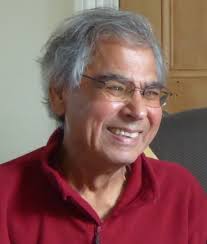
The music of the Indian-British composer Naresh Sohal (1939–2018) is a marvellous fusion of Western classical music and Indian and Eastern musical concepts. Most of Sohal’s works reflect his commitment to Hindu philosophy. Suddhaseel Sen said, “[Sohal] was one of the most remarkable composers of his generation, a man of ambition, talent, determination and philosophical insight. . . . There was no tradition of music in his family, although his father, Des Raj, was an Urdu poet who hosted poetry melas (gatherings) at his home, with his young son in attendance. Naresh had no training in either western or eastern music, but he showed a talent for music early on, learning popular songs from the radio and playing them on the harmonica.”
Sohal composed Asht Prahar in 1965. It was the first orchestral work of his to be performed publicly. Liner notes to a recording said, “Here, he gives a musical account of one day, divided into eight parts (asht prahar), according to Indian tradition. The piece shows the composer experimenting on his own terms with the language of the avant-garde, and is indicative of the confidence and love of orchestral colour that he would go on to demonstrate in later works. The work is a remarkable accomplishment for someone at the start of his career.” Sohal said in an interview, “[A]bove all, I cherish the very first performance I ever had, which was of Asht Prahar, played by the London Philharmonic Orchestra, conducted by Norman del Mar, with Jane Manning, soprano, at the Royal Festival Hall, London, in January 1970.”
Sohal said, “Because I was not trained in music at a conservatoire and learnt music—primarily Indian film music—by ear on my harmonica, I got used to the pure scale and not the twelve-tone one. I heard the interval of the pure fifth but there was none on the piano. This led me to divide the octave into twenty-four intervals or quartertones.” Richard Whitehouse said of Asht Prahar, “The sizable forces are, for the most part, used sparingly yet resourcefully; as too the deployment of such devices as quarter-tones, along with influences of Ravel and Stravinsky, in music that makes a virtue of its pivoting between East and West. Cyclical if not necessarily cumulative, its final and longest ‘prahar’ brings wordless soprano and orchestra into tangible and haunting accord.”
My classical music post for today is Naresh Sohal’s Asht Prahar.


Leave a Reply