

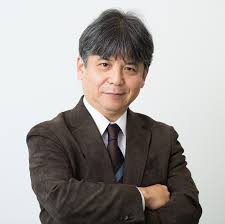
There has always been a cultural exchange between the arbitrarily divided regions labelled East and West. However, the overwhelming influence of European and U.S. art and folk music often obliterated the traditional classical music in Asia. This March, the Daily Classical Music Post explores music by Asian composers who have sought to redress the balance.
Toshio Hosokawa (細川俊夫) – Silent Flowers (1998) for string quartet
The Japanese composer Toshio Hosokawa (born 1955) studied composition with Yun Isang, Klaus Huber, and Brian Ferneyhough in Germany, but he then returned to Japan as he wanted to compose music that was inspired and influenced by classical Japanese music. Dirk Wieschollek said that Hosokawa derives the specific sounds in his string quartets from Asian spirituality as well as from Western modern and avant-garde composers. Hosokawa has aimed to join European and Asian musical styles, saying, “I would not like to emphasize the leaves and branches of the different kinds of music that have developed within the two spheres of eastern and western culture, but rather find the common aspects that exist in the roots out of which both have grown.”
James Manheim said, “The quartets of Japanese composer Toshio Hosokawa presented here bring to mind a fusion of Western avant-garde textures and extended instrumental techniques with traditional Japanese aesthetics. It’s an immensely absorbing combination, and his music appears to have evolved over the years in a more Japanese direction while not losing any of its innovative qualities.”
Hosokawa’s string quartet Silent Flowers (1998) has been described as a reflection on Asian conceptions of time. The three-part work was commissioned for the Donaueschingen Music Festival and premiered by the Arditti Quartet. The Japanese art of ikebana [flower arrangement] and theories about it are the main inspiration for the composition. In the first part of Silent Flowers, there are many silent sections and an instruction for the musicians to “freeze!” There also are hints of noh theatre. The composer said, “Like a flower that blooms in darkness, like the beautiful form of a noh actor, who opens himself in a performance—I wanted to compose such a flower in sound, which would blossom out of silence.”
Wieschollek said, “This piece . . . follows a principle of gradually increasing intensity, in which the sound processes constantly return to silence in order to develop an even greater intensity on their next appearance. Individual passages can take on a merciless expressivity when sounds are produced at the bridge, bowed with great pressure. The ubiquitous presence of noise elements in the sound is an essential aspect of Hosokawa’s musical language and can be traced back to the practices of articulation in Japanese and Korean court music, to sound techniques of the western avant-garde, and to acoustical impressions from nature—a trio of references with substantial significance for the character of Hosokawa’s music.”
My classical music post for today is Toshio Hosokawa’s Silent Flowers.


Leave a Reply