

There has always been a cultural exchange between the arbitrarily divided regions labelled East and West. However, the overwhelming influence of European and U.S. art and folk music often obliterated the traditional classical music in Asia. This March, the Daily Classical Music Post explores music by Asian composers who have sought to redress the balance.
Opera Cô Sao – Đỗ Nhuận (phần 1/4)
Opera Cô Sao – Đỗ Nhuận (phần 2/4)
Opera Cô Sao – Đỗ Nhuận (phần 3/4)
Opera Cô Sao – Đỗ Nhuận (phần 4/4)
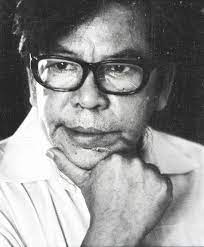
The Vietnamese composer Đỗ Nhuận (1922–1991) grew up in a musical household. His father was a trumpet player in a military band. Đỗ Nhuận was mostly self-taught, although he did study at the Moscow Conservatory for three years. He was awarded the Hồ Chí Minh Prize for music posthumously in 1996.
It has been said that Vietnamese classical music began when a Chinese opera troupe was captured during a Mongol invasion in the north of the country. In the 19th century, years of French occupation seeped into all aspects of life, including music. Lisa Yui said, “As Vietnam was controlled by France for over six decades, earlier Vietnamese music displayed influences of Impressionism.” Most of the classical music performed in Vietnam was European. Folk music and traditional Vietnamese music was not exactly outlawed, but many musicians, including Đỗ Nhuận, were imprisoned for their anti-French, pro-Vietnamese music and their revolutionary views.
Đỗ Nhuận’s earliest works are patriotic songs and poetic drama. His music is a fascinating amalgam of Eastern and Western influences. A Vietnamese website about his life said, “During the Resistance War against the French, with some unique musical languages occupying a special place in Vietnamese music, Đỗ Nhuận wrote many works that made a strong impression, urging the whole nation to journey through hardship.” One of his most revered works from that time commemorated the battle of Dien Bien Phu. Although Đỗ Nhuận composed for instruments and piano, it is his songs and operas for which he is most remembered.
Đỗ Nhuận’s 1963 opera Cô Sao (Miss Sao) is considered to be the first opera in Vietnamese. The website Vietnamnet Global said, “The work tells the story of an ethnic Thai girl named A Sao, living in the northeast mountainous area of Viet Nam. Sao was an orphan and suffered various injustices at the hands of the local ruling colonial powers until she met revolutionaries, who gradually persuaded her to follow their path against the French colonists. . . . Cô Sao measures up to international opera standards and incorporates the bel canto singing technique. The work also resonates with Vietnamese audiences because it illustrates the spirit of national resistance against the French colonists in Son La in the 1947–52 period.”
Cô Sao was staged in 1965 and again in 1976, but it wasn’t until the composer’s son found a manuscript score in 2012 that it was revived. The composer said, “In our country, there are three models of national opera: tuong, cheo, cai luong, why don’t I rely on one of these three types of stage music to build our musical to clearly inherit the ancient national capital?” Nguyễn Khánh Trang said, “Đỗ Nhuận has inherited the folk music of the Northwest region along with the common characteristics of ethnic music, building the character theme, songs, dances, and instrumental music throughout the acts in the opera Co Sao. Typical are the dances with strong national colors, imitating familiar pictures in the labor and collective life of the Thai people . . . singing acts using the 5-tone scale, the folk music of the Northern mountainous region of the Thai people. . . . The author is not limited to the singing of the character Sao in Thai folk songs but also uses the material of Cheo music in the main theme song when expressing Sao’s painful and resentful feelings.”
My classical music post for today is Đỗ Nhuận’s Cô Sao.


Leave a Reply