

William Cosgrove famously said, “Music hath charms to soothe a savage breast.” At this pivotal moment in the world’s history, the Daily Classical Music Post explores music by composers who ran afoul of tyrants and dictators and who as a result were banned, imprisoned, or executed. We’ll also listen to some music by composers who criticized the regime under which they worked but managed to fool the ruler.
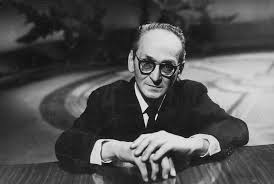
The Argentine tango musician and composer Osvaldo Pugliese (1905–1995) is thought to be the first to really develop concert-style tango music. He planned to be a graphic artist but after studying music at the Conservatorio Odeon he became a musician. His first tango, Recuerdo, was published in 1924, when he was 19 years old. It is still his most famous work. He performed his own works on the piano with an orchestra.
Pugliese was a member of the Argentine Communist Party, and he also worked on behalf of all musicians to improve working conditions and wages. He helped to form the Sociedad de Músicos y Artistas Afines in 1937, partly in response to the technological changes in music recording, which led to tens of thousands of studio musicians losing their jobs.
Enrique Medina said, “The exact reason why Osvaldo Pugliese was imprisoned the first time was never known, a fact that did not occur during the Perón government but before, in 1939, when he was preparing to debut with his orchestra at the inauguration of the new headquarters of the Communist Party. . . . They wanted to punish the rebellion by imprisoning a prestigious figure on the left.” This was just the first of many times that Pugliese was arrested and imprisoned. Sometimes he was arrested right before a performance of his music. When that happened, a red carnation would be placed on the piano and the performance would go ahead, without a pianist.
In 1955, Pugliese was imprisoned for seven months and spent his time mopping the floors. He was released but was rearrested and imprisoned in 1956 by the leaders of the Revolución Libertadora, in what was known as the “Operation Cardenal.” The entire central committee of the Argentine Communist Party was locked up in a ship, and the plan was to sink the vessel with all of the detainees inside. However, there was such an outcry when people heard that the ship was to be sunk that everyone was released.
Pugliese spent many years in jail. His recordings were restricted by successive governments. In the 1960s, the government of Juan Carlos Onganía also banned Pugliese from performing in public or on the radio. Throughout all of this, the members of his orchestra were extremely loyal to him. Some of the members remained in the orchestra for over 30 years. And Pugliese was extremely resilient; he did not stop composing or performing when he was able to do so.
My classical music post for today is Osvaldo Pugliese’s Recuerdo.


Leave a Reply