

Christmas is so commercialized and mostly about consumerism, but at its root it is about birth, peace, joy, love, light, and goodwill. This December, the Daily Classical Music Post will look at music that celebrates birth, rebirth and resurrection, peace, hope, and joy.
McCulley-Falconer Duo – Birth of the Snow by Ryo Noda
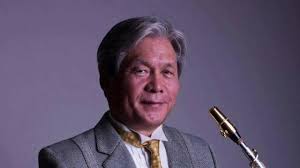
The Japanese composer Ryo Noda (born 1948) is known for his classical works for saxophone as well as for his invention of Musico-Kinetic Therapy. He has won prizes for his compositions. He also is an acclaimed saxophonist, noted for his control of the instrument as well as his innovative technique.
Neil McGovern said, “[His] compositions are known for their effective melding of Japanese and Western art forms. . . . His writing for saxophone is as sophisticated as it is innovative, drawing on a range of extended techniques, but always applied in very musical contexts.” As a saxophonist, Noda was particularly influenced by Edison Denisov’s Sonate, which, as James Umble and Miche Gringas said, was “the front door which many 20th century composers stepped through becoming interested in Adolphe Sax’s instrument.” Michael Christensen said that the French avant-garde saxophonist Jean-Marie Londeix “had a clear influence on Noda’s compositions.”
Naissance de la Neige (The Birth of Snow), for alto saxophone and piano or electric organ, is a mesmerizing and fascinating work. It is a technically demanding piece with moments of true beauty intermingled with bursts of flashy runs and trills. The keyboard is more than an accompaniment, as it has its own important statements to make throughout. One analysis of the score points out that the “keyboard part seems more like a textural component rather than accompaniment. There are elements of aleatoric writing in both parts with clusters of tones within time frames (i.e. this group of notes should be played within 9″). It isn’t until the last section called III. Like snow that the wind blows gently on the ice where an accompaniment role is found with the keyboard playing rolled chords then reverts back to the writing similar to the beginning.”
My classical music post for today is Ryo Noda’s Naissance de la Neige.


Leave a Reply