

Christmas is so commercialized and mostly about consumerism, but at its root it is about birth, peace, joy, love, light, and goodwill. This December, the Daily Classical Music Post will look at music that celebrates birth, rebirth and resurrection, peace, hope, and joy.
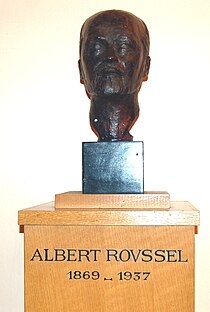
The French composer Albert Roussel (1869–1937) did not begin composing until he was an adult. His first career was in the French Navy, and his travels are reflected in many of his compositions. He also was influenced by Claude Debussy and Maurice Ravel in his early Impressionist works as well as by his teacher Vincent d’Indy, although his later compositions are more neoclassical. Andrew Clements said, “If his early scores belong very much to the French tradition he’d inherited from D’Indy and expanded via the influence of Debussy, the later music has a more neoclassical feel, more Hindemith than Stravinsky perhaps, with lean, clear textures, crisp outlines and propulsiveness.”
Brian Hart said, “Résurrection (1903), Roussel’s first orchestral work, dates from the composer’s student years. He provided no program for his so-called prélude symphonique, which takes its inspiration from the final novel of Leo Tolstoy. Tolstoy’s Resurrection (1899) concerns a young nobleman’s desperate search for spiritual redemption.”
The opening bars of Résurrection are incredibly atmospheric, with incredible effects created through the use of semitones, tritones, and ninths. This introduction is followed by a more turbulent section, which gives way to more peaceful music that is almost Romantic in feel, and then finally the coda brings together some of the themes heard throughout. Résurrection is a wonderful introduction to a composer who has been for the most part sadly neglected in the latter half of the 20th century and the early 21st century.
My classical music post for today is Albert Roussel’s Résurrection.


Leave a Reply