

The first work of a classical composer can provide a glimpse of who that composer will become, or it can seem as if it was written by a totally different musician. This November, the Daily Classical Music Post will explore some first works (or Op. 1 works, not always the very first work) by composers familiar and unfamiliar.
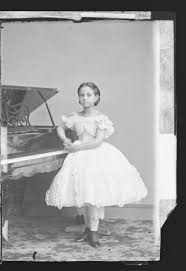
The Venezuelan pianist and composer Teresa Carreño (1853–1917) was known internationally as the “Valkyrie of the Piano.” Not long after her family emigrated to New York City in early 1862, she met the American pianist and composer Louis Moreau Gottschalk, who became a promoter and teacher of the eight-year-old prodigy. Gottschalk said in a letter to a friend, “She is not only a wonderful child, but a real genius. As soon as I am in New York. . . . I intend to devote myself to her musical instruction.”
So it was not surprising that her Op. 1, published when she was not yet ten years old, was the Gottschalk Waltz (1863), dedicated to Gottschalk. Valerie Capel said, “Gottschalk Waltz, although written by a ten-year-old girl, is a technically dazzling display of virtuosity. Following basic chord progressions, this early composition doesn’t stray too far from its Ab major starting point, modulating into f minor, Eb major, and c minor. Carreño’s love of trills and leaps is well represented, eliciting awe due to her small hands. The waltz itself contains eight waltz tunes and adheres to the typical oom-pah-pah rhythm that defines the waltz.”
Chantel Incandela said, “It’s a charming salon piece, filled with bright runs, pretty ornaments, and is generally a lot of fun. It’s what you’d expect from a salon piece—charm and camp, all in one!”
My classical music post for today is Teresa Carreño’s Gottschalk Waltz.


Leave a Reply