

Politics can shape music just as music can express political ideas. This October, the Daily Classical Music Post will look at some of the music written as a protest, commemoration, or statement of political beliefs.
Janáček: Piano Sonata 1.X.1905, JW VIII/19 “From the Street”: I. Presentiment
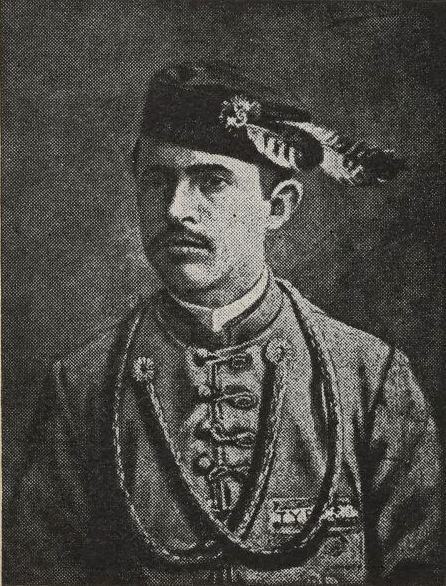
On 1 October 1905, a young Czech carpenter, František Pavlík, was stabbed to death by an imperial army soldier during a peaceful demonstration calling for a new university in the Czech city of Brno. This was a cataclysmic event; almost 80,000 people turned out four days later for Pavlik’s funeral, and many leaders in Czech’s artistic community commemorated the event and Pavlik in their works.
One of the most well-known of these is the only piano sonata composed by Leoš Janáček (1854–1928). Janáček began working on 1.X.1905, also known as Piano Sonata 1.X.1905 (and also sometimes known as From the Street), immediately after Pavlik’s murder. He completed the two-movement sonata in early 1906. There originally was a third movement, but he threw it out before the premiere. He actually threw away the entire work by tossing it into the Vltava, but 20 years later someone discovered a copy, fortunately.
Janáček included an inscription on the first page of the manuscript: “The white marble of the steps of the Besední dům in Brno. The ordinary labourer František Pavlík falls, stained with blood. He came merely to champion higher learning and has been slain by cruel murderers.”
Tony Chen Lin said, “The volatile first movement ‘Presentiment’ begins with a haunting melody, dislocated by sudden unsettling angular interjections. Much of Janáček’s music is peppered with these wild, obsessional and seemingly irrational outbursts, like willful aberrations. Spoken rather than sung, these agitated rhythmic patterns stem out of Czech speech. Janáček actively collected Moravian folk music and notated the speech melodies of people he encountered to use as material for his compositions.”
My classical music post for today is Leoš Janáček’s 1.X.1905.


Leave a Reply