

Politics can shape music just as music can express political ideas. This October, the Daily Classical Music Post will look at some of the music written as a protest, commemoration, or statement of political beliefs.
IDENTITY | ( بطاقة هوية) | CANTATA DRAMMATICA | Salvador Arnita | Garbis Boyagian 1970
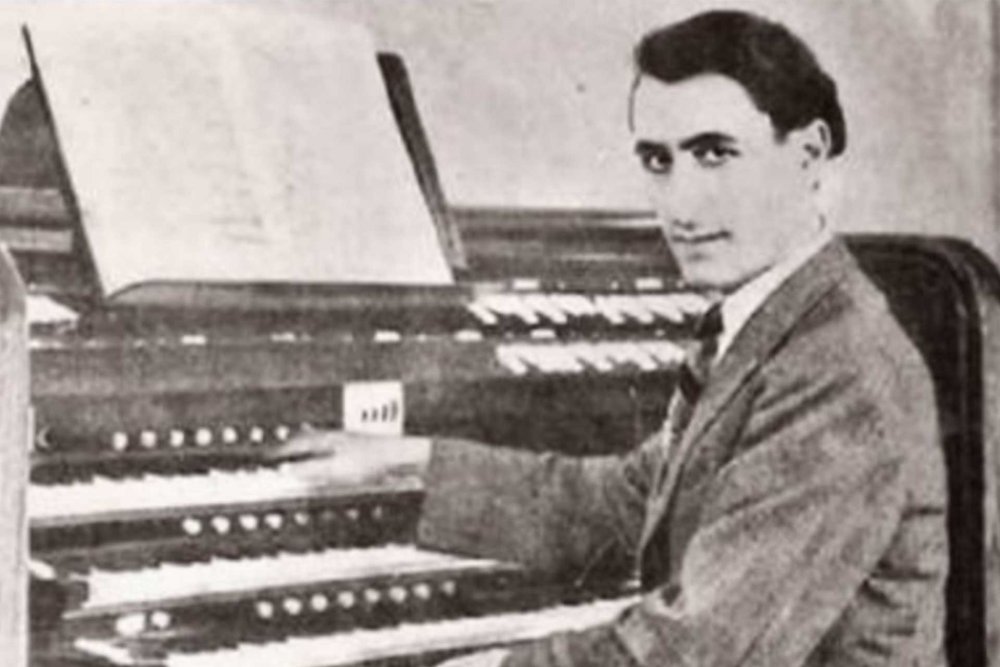
The Palestinian composer Salvador Arnita (1914–1984) was born in Jerusalem. He studied organ and composition in Egypt, Rome, and London, and was teaching in Jerusalem at the time of the Nakba. Along with hundreds of thousands of Palestinians, he became a refugee, settling in Lebanon. It was in the “Vienna of the Middle East,” Beirut, that his particular blending of Palestinian folk and classical music and Western European classical music really developed and blossomed. His output of over 200 works included symphonies, concertos, piano and organ works, and chamber music.
The website jerusalemstory.com said, “Among his well-esteemed compositions was the cantata ‘Identity,’ based on the poem of Mahmoud Darwish, Sajjil Ana ‘Arabi (Write down: I am an Arab). This was written for a full symphony orchestra, with a choir of 74, and it is considered a hallmark contribution to the Palestinian national struggle.”
“Cantata Dramatica (Identity Card)” was composed between 1968 and 1969 and received its premiere in Cairo in 1970. Arnita said, “The Cantata is composed in the classical tradition. It has two main themes. The first is based upon two diminished intervals and the second relies on contrapuntal development. The first theme appears seventeen times, augmented in time values, ornamented and inverted throughout the orchestra and voices. The second theme appears first as a fugal exposition and is followed by a canonic section in two parts for male and female voices. The middle section makes use of three folk songs. . . . The final section is preceded by ‘Taqasim’, an oriental improvisation, played on the Kanoon. The music then moves towards a climax of soloist, choir and orchestra.”
My classical music post for today is Salvador Arnita’s “Cantata Dramatica (Identity Card).”


Leave a Reply