

This July, the DCMP will share some previous posts that you might have missed or would just like to hear again! A new theme begins in August.
Published November 30, 2015
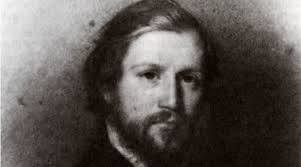
Today is the anniversary of the birth of the French composer and pianist Charles-Valentin Alkan (30 November 1813–29 March 1888).
Charles Valentin Alkan – Funeral March on the Death of a Parrot – Raymond Lewenthal
Alkan was one of the greatest pianists of his day, and many consider him to be a forgotten genius now. He was a child prodigy; he began his studies at the Paris Conservatoire at the age of six, and was part of the Eugène Delacroix–Franz Liszt–Frédéric Chopin social set in the early 1800s. However, he became more and more reclusive, and basically withdrew from society and stopped performing after 1848. In 1861, he wrote to Ferdinand Hiller, “I’m becoming daily more and more misanthropic and misogynous . . . nothing worthwhile, good or useful to do . . . no one to devote myself to. My situation makes me horridly sad and wretched. Even musical production has lost its attraction for me for I can’t see the point or goal.” Alkan never married, but there is evidence that the painist Élie-Miriam Delaborde (1839–1913) may have been his illegitimate son.
Douglas Purl says of Alkan, “He is widely thought of as an eccentric par excellence. In his later years he became intrigued with the pedalier, a pedal board that attaches to the piano and enables full performance of organ literature on the piano. He was fond of playing the compositions of Bach on this device, and composed copiously for it. His piano works require the utmost of skills, attesting to Alkan’s own. Few performers care to attempt the difficulties of the Alkanian oeuvre in public, though some display their uncommon prowess by means of his works. The name of Alkan even now remains one capable of engendering vigorous debate in musical circles.”
Alkan wrote almost exclusively for the piano and organ, and his works are at the same time virtuosic and beautiful. He also had a great sense of humour; his Funeral March on the Death of a Parrot brings to mind Monty Python, of course. This work was written for mixed voices and wind instruments, and it could have been written by P D Q Bach.
Fred Flaxman says, “Alkan starts with an introductory bogus funeral march. Then the singers enter with ‘As-tu déjeuné, Jacot?’ Jacot is the French equivalent of Polly; ‘As-tu déjeuné’—which means ‘Have you eaten?’—is what the French say to their parrots when we would say ‘Polly wants a cracker?’ The only other words in the piece are: ‘Et de quoi?’—literally, and of what? What did you eat?”
My classical music post for today, in all its wonderful glory, is Charles-Valentin Alkan’s Funeral March on the Death of a Parrot.


Leave a Reply