

This July, the DCMP will share some previous posts that you might have missed or would just like to hear again! A new theme begins in August.
Published September 1, 2016
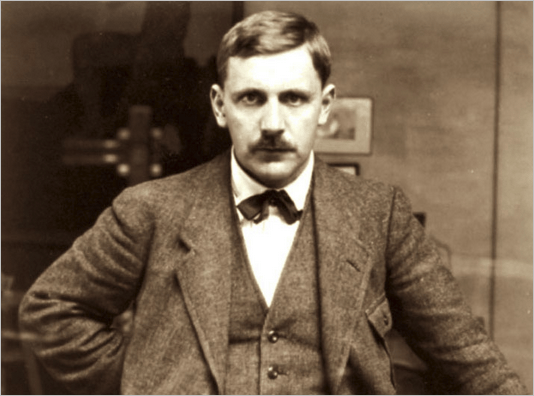
Today is the anniversary of the birth of the Swiss composer and conductor Othmar Schoeck (1 September 1886–8 March 1957).
Sonata for Cello and Piano, Op. posth.: I. Fliessend
Schoeck was known mainly for his art songs and song cycles. He did write one opera as well as a variety of instrumental music. He composed in several styles, experimenting at various times with minimalism, polyrhythm, and bitonality. He studied with Max Reger and was influenced throughout his life by composers as diverse as Busoni, Wolf, Berg, and Honegger. Busoni was not happy when Schoeck began composing more like Berg; he said, “Schoeck has completely abandoned me. I have not entirely given him up. He lacks (or lacked) certain ingredients, which are not available at the chemists’. Which should however be manufactured in his own laboratory.”
Schoeck did not complete his Cello Sonata (WoO 47); of the intended four movements, he only finished three. Rob Barnett says, “The cello was important to Schoeck. Some months before his death he heard a performance of [his cello] concerto and this inspired him to begin work on a cello sonata which lay incomplete when he died.”
Chris Walton says in “Othmar Schoeck: Life and Works”: “[Schoeck’s] health had deteriorated since the turn of the year [1957]. . . . He worked ‘as if possessed’ at his new cello sonata . . . ‘using every minute that his sufferings allowed him.’ . . . He would often be unable to continue composing and would cry . . . ‘It won’t work any more, it just won’t work any more’.”
Schoeck’s brother, an amateur cellist, would play the vocal line in compositions that Schoeck was working on, just to see what they might be like. Andrew Clements says that the cello “is the perfect instrument to articulate Othmar Scheock’s brand of faded melancholy,” and when you listen to the three completed movements of the Cello Sonata, you can imagine a voice singing the cello line.
My classical music post for today is Othmar Schoeck’s Cello Sonata: I. Fliessend.


Leave a Reply