

This June, the Daily Classical Music Post celebrates Pride Month by listening to music written by LGBTQIA+ composers throughout history.
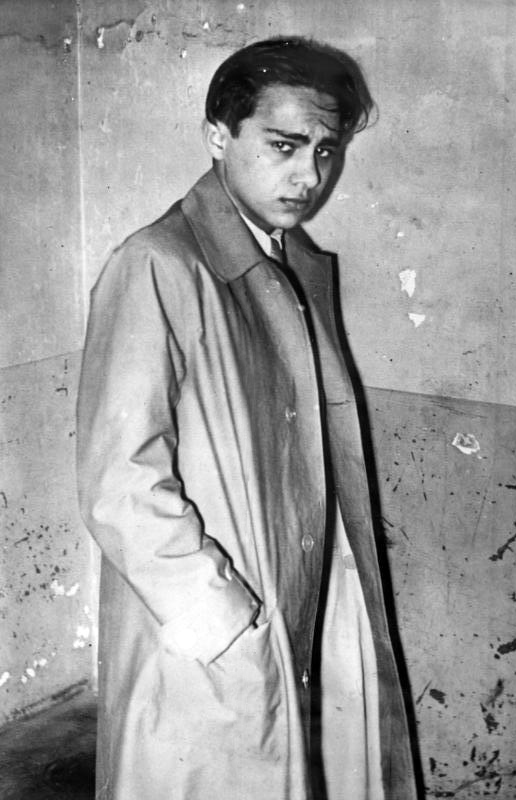
The English composer Sir Michael Tippett (1905–1998) was outraged at the Nazi treatment of Jews, and this was the inspiration for his oratorio A Child of Our Time. The oratorio is dedicated to Herschel Grynszpan (pictured today), whose assassination of a German diplomat in Paris was the pretext that was used as justification for the pogrom known as Kristallnacht.
Dave Koplin said, “A Child of Our Time, an oratorio which acknowledges and draws from the tradition of both George Frideric Handel and J.S. Bach, is perhaps Tippett’s most famous work. He began writing the oratorio at the very beginning of World War II in response to his outrage at the world’s apathy to the plight of Jewish refugees. The story is based on headlines ripped from the newspapers of the day. Tippett had read about Henschel Grynsban [sic], a young Polish Jew who had fled to France to escape the Nazi pogrom. Grynsban’s mother and father, left behind, were apparently suffering at the hands of the Nazi persecutors. The young man snapped and killed a minor Nazi official in Paris; the Nazi retribution was severe and vigorous (his parents were executed and the young Grynsban disappeared). The story affected Tippett deeply and inspired this oratorio, a work which Newsweek magazine described (nearly 30 years later) as ‘something Handel might have written had he lived in the age of Auschwitz’.”
The description on the publisher’s website says, “A Child of Our Time is a traditional baroque oratorio with a famous twist: Tippett places five Spirituals at its heart, instead of Bach’s Lutheran chorales. He knew that audiences would recognise them and be able to sing them in the same way Bach’s congregation sang the chorales.” Tippett also believed that the spirituals, as they were songs of oppression, were more in keeping with what he was saying in the work.
Oliver Soden said that Tippett’s “active political engagement eventually dissolved almost entirely in the face of his dedication to music. This dedication did little to help the continuing difficulties of his private life, which was caught between Platonic relationships with beloved women friends . . . and passionate, often overlapping, affairs with men (his partner Karl Hawker committed suicide some years after their split). By his and the century’s seventies he had settled into a lasting relationship with the music writer Meirion Bowen, though continued to live alone in the Wiltshire countryside.”
My classical music post for today is Michael Tippett’s A Child of Our Time.


Leave a Reply