

This June, the Daily Classical Music Post celebrates Pride Month by listening to music written by LGBTQIA+ composers throughout history.
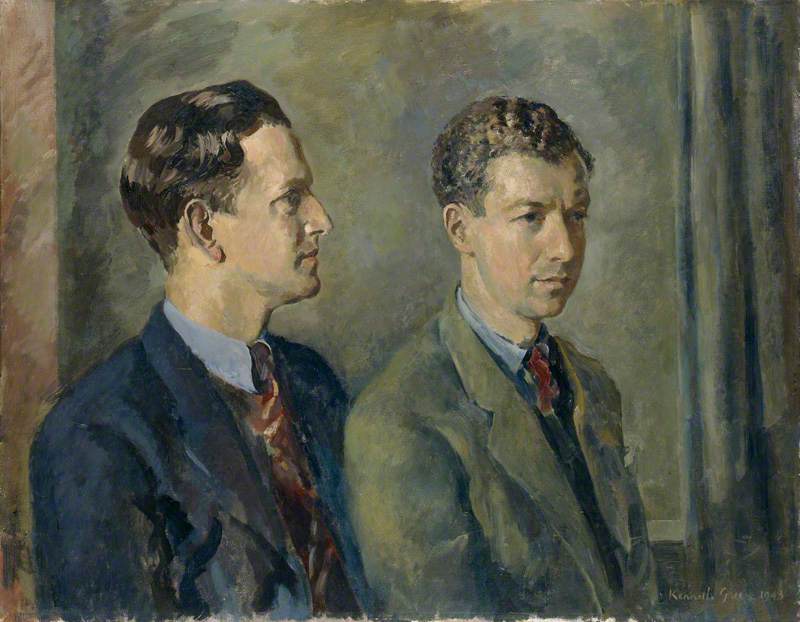
Sir Peter Pears; John Shirley-Quirk; “DEATH IN VENICE”; Benjamin Britten
The English composer Benjamin Britten (1913–1976) based his final opera, Death in Venice, on the novella by Thomas Mann set in a cholera outbreak in Venice. Cholera is not a main character in the novella or in Britten’s two-act opera, but it is always lurking in the background and finally comes to the fore in the final pages, when the main character, Gustav von Aschenbach, succumbs. Britten composed the role of Aschenbach for his partner Peter Pears.
Christopher Hilton said, “For more than 35 years, the composer Benjamin Britten and singer Peter Pears lived together as life partners, their work together as musicians underpinned by a deep and fixed relationship that the two men described as a marriage. Although it was an open secret, for much of their lives that relationship was illegal and a plausible deniability had to be maintained at all times.”
Britten said of Death in Venice, “I remember that I wanted passionately to finish this piece before anything happened. For one thing it is probably Peter’s last major operatic part; for another it was an opera I had been thinking about for a very long time.” Unfortunately, he was already in failing health as he worked on the score. Colin Matthews, who helped Britten write out the orchestral parts, said, “There is a very dark side to the work that I still can’t claim to understand.” Britten was too ill to attend the premiere, but Pears sang the role several times, and it is considered to be one of both his and Britten’s greatest achievements.
My classical music post for today is Benjamin Britten’s Death in Venice.


Leave a Reply