

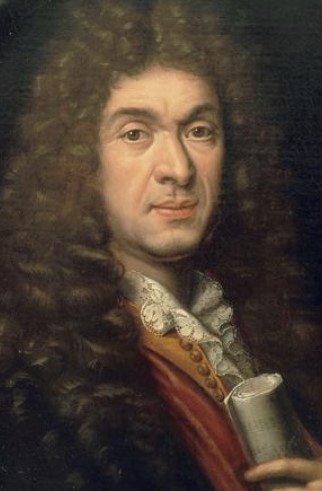
This June, the Daily Classical Music Post celebrates Pride Month by listening to music written by LGBTQIA+ composers throughout history.
I imagine that the story of how the Italian-French Baroque composer and conductor Jean-Baptiste Lully (1632–1687) died is pretty well known to most fans of classical music, and maybe even to a wider audience. In case you don’t know, here’s a synopsis: In those days, there wasn’t a conductor of an orchestra per se. Either the first violin (still called the leader in some European orchestras) indicated tempo, starts and stops, etc., or someone stood in front of the orchestra and banged on the floor with a big stick. Lully was one of the latter, and it was in a rehearsal that he managed to bang the stick into his foot. Long story short, the wound got infected, gangrene developed, and Lully was no more.
But before that, he had quite the interesting life. He had known Louis XIV of France for most of Louis’ life, and Louis’ love of dancing led to him eventually appointing Lully court composer. Lully and his friend the poet and playwright Molière wrote many ballets specifically for the king. Louis used music and dance to create a show of strength and solidify his power over his kingdom. When Louis got older and wasn’t able to dance any more, he and Lully had a bit of a falling out, and Lully and Molière also stopped working together. But what had been created up to that point changed French classical music forever.
Lully was married to a woman but also, as they say, very much “enjoyed the company of men,” and most biographies do not shy away from discussing his bisexuality. Graham Abbott said, “Lully was either homosexual or bisexual; already by this stage of his life rumours were circulating about his enthusiastic involvement in the gay underworld of the court, which included many nobles and even the King’s brother, Philippe, Duke of Orléans. His marriage would have helped present a conventional front to the world and his discretion seems to have, at this stage, prevented the King from taking any action. The inner details of Lully’s marriage are not known, but they did have six children. It seems Lully also had a mistress, just to make sure.”
My classical music post for today is Jean-Baptiste Lully’s Les Folies d’Espagne.


Leave a Reply