

This June, the Daily Classical Music Post celebrates Pride Month by listening to music written by LGBTQIA+ composers throughout history.
Phinot: Iam non dicam vos servos
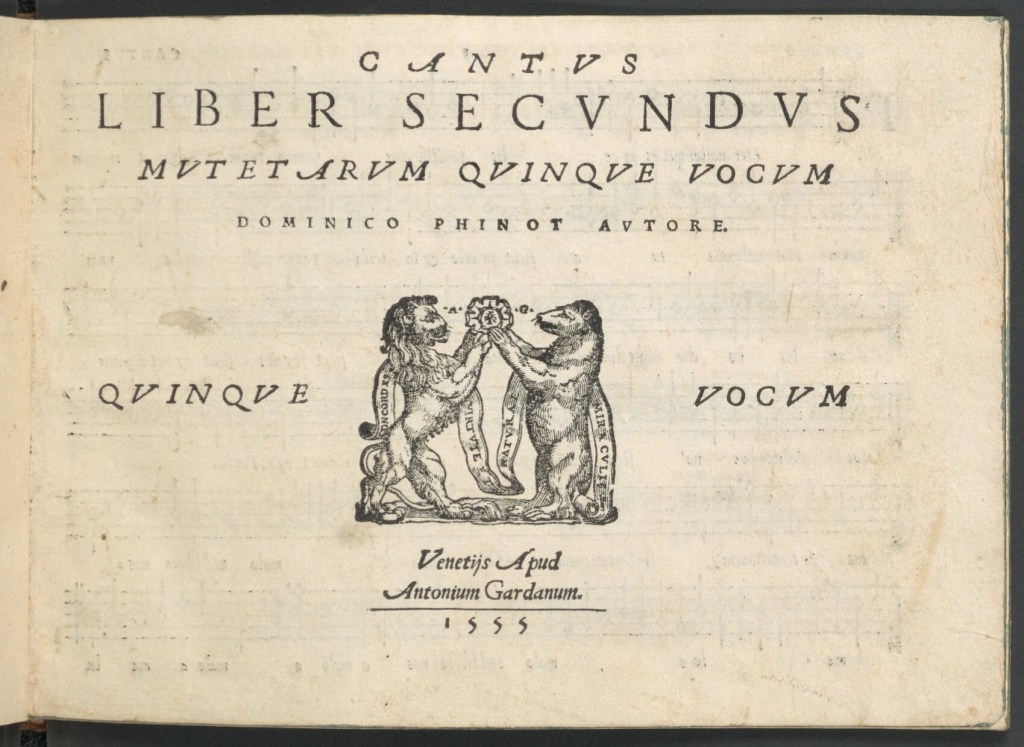
The Franco-Flemish Renaissance composer Dominique Phinot (c. 1510–c. 1556) was executed for “homosexual practices” in Lyon (according to Girolamo Cardano, in his essay “Theonoston”). Roger Jacob and Stephen Rice said, “Information about Phinot’s career is confined to a handful of documents from the 1540s and 1550s which indicate that he was a musician in the service of Duke Guidobaldo II of Urbino. . . . Phinot’s output consists of over a hundred motets, two Masses, and settings of Vesper Psalms and the Magnificat, as well as two books of French chansons and two Italian madrigals. The acclaim with which his sacred compositions were received is evident both in the frequency of their publications as well as in the writings of his contemporaries. He was renowned as a master of imitative polyphonic writing. . . . Not only do the five-voice motets in the Liber primus mutetarum confirm his outstanding polyphonic skills but the Liber secundus contains five eight-voice works which are of considerable historical importance. . . . In his eight-voice sacred works Phinot builds upon those essential features of double-choir technique which first appeared in the liturgical music of northern Italy, mainly in the Veneto, during the early decades of the sixteenth century.”
“Iam non dicam vos servos” is a marvellous example of Phinot’s mastery at writing for double choir. This joyful sacred motet was first published in 1541. The text comes from John 15:15, and it is the responsory for the ordination of a priest.
My classical music post for today is Dominique Phinot’s “Iam non dicam vos servos.”


Leave a Reply