

“The world’s favorite season is the spring.”—Edwin Way Teale
The Russian composer Sergei Rachmaninoff (1873–1943) wrote his one-movement cantata for baritone, chorus, and orchestra Vesna (Spring), Op. 20, in 1902. It’s not an entirely happy work. The poem upon which it is based, by the Russian poet Nikolay Nekrasov, tells the story of a husband plagued by murderous thoughts against his wife during winter; he fortunately is released from this at the start of spring.
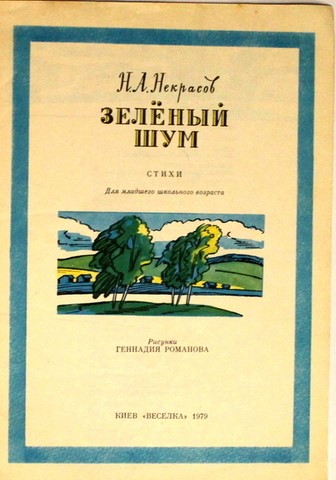
Jeffrey Dixon says, “The text ‘The Green Noise,’ by Nikolai Nekrasov begins with a beautiful depiction of the spring time. The verdant, or green, noise is a Russian folk expression that describes the awakening of nature in spring. The next verse begins with a man telling the story of his wife’s unfaithfulness while he was living in town during the summer. The husband and wife are forced to live in close quarters in their hut as winter comes. The winds howl and represent the inner turmoil felt by the man for his unfaithful wife, even to the point of the winds suggesting he murder her. They say ‘kill the traitorous woman! Destroy the evildoer or else you will regret it all of your life, you well never find any peace!’ He eventually cannot take it anymore and picks up a sharp knife, but just as he does so the ‘verdant noise’ of spring suddenly returns. The opening melodic motives of the Russian spring returns and expands. His murderous thoughts cease as he drops his knife and remembers a powerful song from the forest and meadow. Almost hymn-like, ‘Love while you still can love, endure while you still can endure, forgive while you still can forgive, and let God be your judge’.”
My classical music post for today is Sergei Rachmaninoff’s Vesna.


Leave a Reply