

“The world’s favorite season is the spring.”—Edwin Way Teale
Ottorino Respighi “La Primavera”
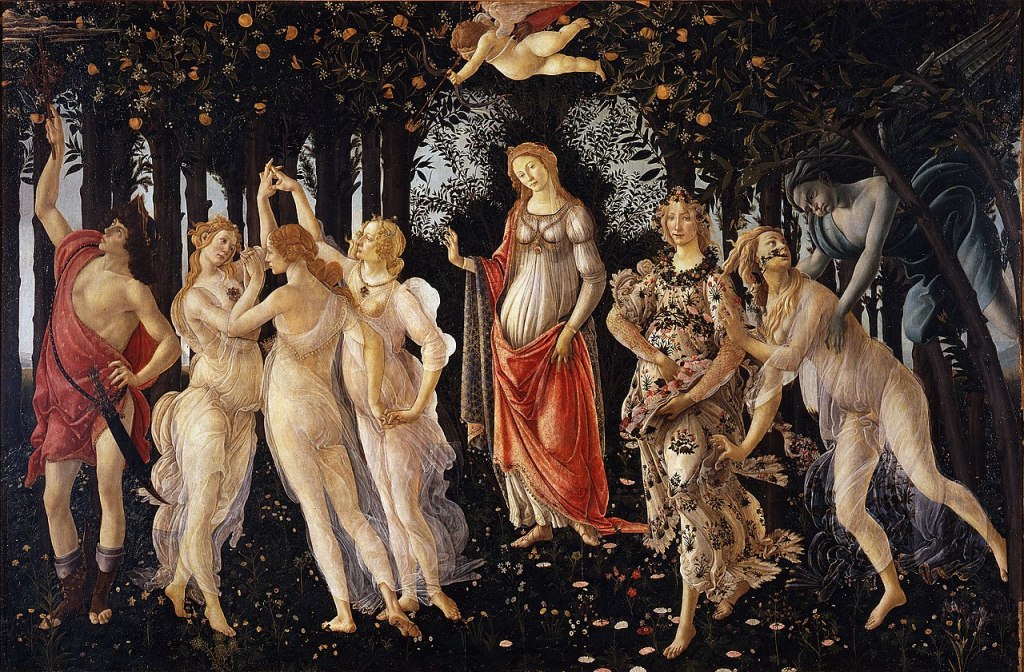
The Italian composer Ottorino Respighi (1879–1936) may have drawn inspiration for his lyric poem La primavera from the painting of the same name by the Italian Renaissance master Sandro Botticelli. La Primavera, written initially as a cantata in 1919, is composed for six soloists, chorus, and an expanded orchestra that includes a third solo flute behind the rest of the instrumentalists, E flat and bass clarinets, four horns, three trumpets, three trombones and tuba, full string sections, and abundant percussion. The text was based on Constant Zarian’s adaptations of ancient Armenian poetry.
The conductor Adriano said, “With La Primavera Respighi’s remarkable excursion into the field of the cantata finds its triumphant affirmation. Aretusa (1911), II Tramonto (1914) and La Sensitiva (1915), all based on texts by Shelley and written for the Italian mezzo-soprano Chiarina Fino-Savio, show the composer’s predilection for a vocal symphonic poem, avoiding the character of oratorio, somehow between traditional cantata and opera, which he called poema, or poemetto, lirico. Although La Primavera is based on a text of religious connotation, it is conceived in a quasi-dramatic way, since a few dramatic indications are added to the score, in order to help performers and audience to understand better its atmosphere. It is not only the inclusion of a large chorus and six soloists that makes La Primavera a large-scale work but also the fact that its poetic message has lost the sense of intimacy proper to the earlier cantatas, to become a celebration involving larger audiences. Nevertheless the title poema lirico and the musical structure of the symphonic poem are preserved.”
My classical music post for today is Ottorino Respighi’s La Primavera.


Leave a Reply