

Chamber music, sometimes described as “the music of friends,” is generally used to refer to music composed for a small group of instruments or voices, with one performer to a part. The intimacy of chamber music makes it a perfect genre for compositions marking important events or for unusual combinations of instruments. This April, the Daily Classical Music Post will introduce you to some of these very special works.
Terry Riley – In C (1968) FULL ALBUM
When people think of minimalist classical music, one of the first names to come to mind isn’t usually that of the American composer Terry Riley (born 1935), but it probably should be, as it is generally recognised that Riley is one of the pioneers of the style. Riley’s music shows influences of jazz and Indian classical music, and his innovations in repetition, use of electronics, and improvisation influenced musicians in all genres.
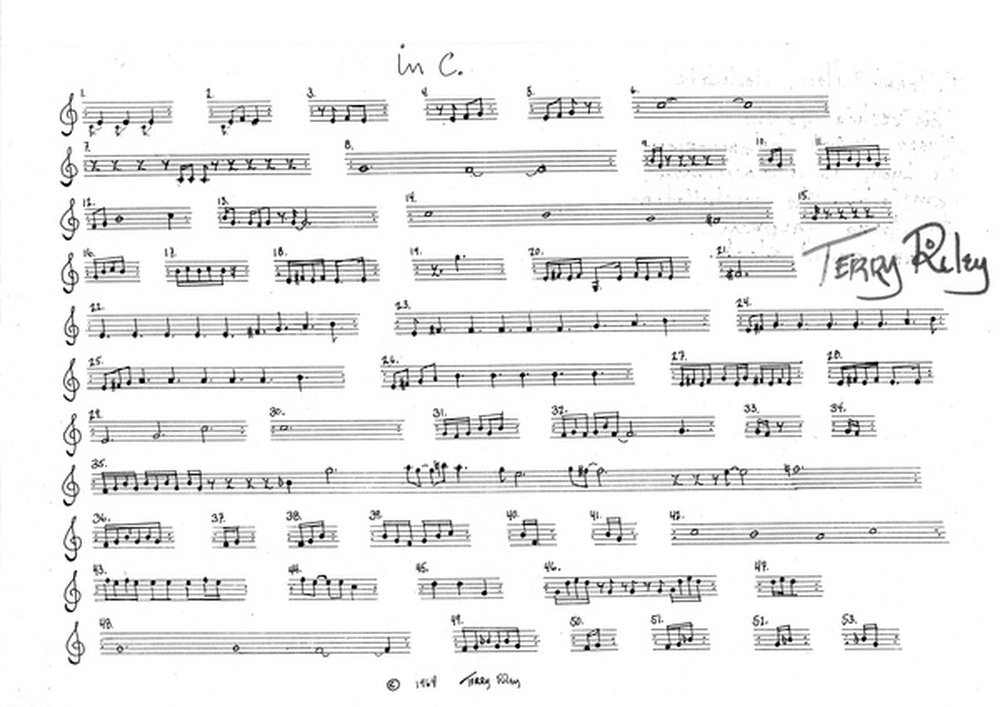
In C, composed in 1964, is meant to be performed by a chamber group of at the most 35 musicians, but often the group is much smaller than that (as on today’s recording, which has 11 performers, with some overdubbing). Tero Parviainen said, “Although ‘In C’ is not a tape work, and never was, loops are central to how the piece is constructed. In works like ‘Mescalin Mix,’ Riley had discovered what looping could do in his music. ‘In C’ was an attempt to transfer the idea of loops into live music. Instead of having a piece of tape going round and round, a loop would be constructed by having a musician repeat a phrase over and over again. This was not to have humans act like machines, but to achieve the time-altering power of loops in music that is performed live by human beings.”
There are 53 numbered short phrases in the work, some as short as half a beat and some as long as 32 beats. The musicians are directed to play the first phrase in unison to start, and then they are free either to play that again or move on. Everyone keeps to the same tempo, but other than that they are free to continue on to the next phrase whenever they want. The instructions advise that all of the musicians should try to stay within two or three phrases of everyone else. The first musician to reach the final phrase keeps repeating it until everyone else reaches that point.
One musician, usually a pianist or percussionist playing something like a marimba, plays the note C throughout the performance, in repeated eighth notes (quavers). “The Pulse,” as this is called, is the last thing to be played after all of the other musicians reach the final phrase. This acts as a sort of metronome and also kind of grounds the piece harmonically.
As you can imagine, every performance of In C is different, and the length varies widely, although Riley suggests a minimum of 45 minutes. The recording shared today, featuring Riley on saxophone and 10 other musicians, is preserved in the U.S. National Recording Registry as being “culturally, historically, or aesthetically significant.”
My classical music post for today is Terry Riley’s In C.


Leave a Reply