

Chamber music, sometimes described as “the music of friends,” is generally used to refer to music composed for a small group of instruments or voices, with one performer to a part. The intimacy of chamber music makes it a perfect genre for compositions marking important events or for unusual combinations of instruments. This April, the Daily Classical Music Post will introduce you to some of these very special works.
Quintet for Baryton, Two Horns, Viola And Bass in D, Hob. X:10: III. Menuett
The Austrian composer Franz Joseph Haydn (1732–1809) is known as the “Father of the String Quartet.” Haydn was one of the most important figures in the development of chamber music, particularly string quartets and piano trios. Most of his career was spent as court musician for the Esterházy family in Hungary, and he attributed his inventiveness in all forms of music to the fact that he was far away from major musical centres and so was “forced to become original.”
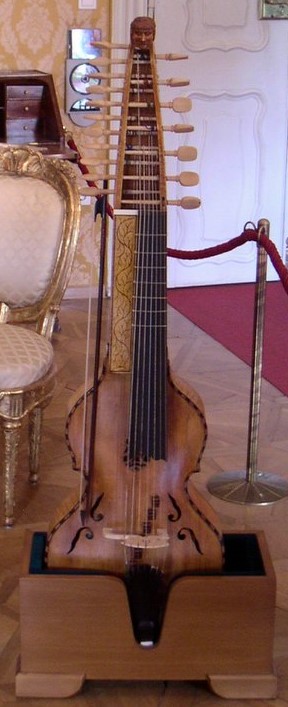
Prince Nikolaus, Haydn’s patron, was a keen musician, and one of the instruments that he enjoyed playing was the baryton, which was a string instrument that was part of the viol family. Unlike other 17th- and 18th-century string instruments, the baryton had two sets of strings: six or seven gut strings plus a lower set of wire strings. The wire strings would vibrate sympathetically when the other strings were bowed. The resulting sound is full and mesmerizing.
Nikolaus was really thrilled with his baryton and insisted that Haydn compose works for it: “Finally, said Capelmeister Haydn is urgently enjoined to apply himself to compositions more diligently than heretofore, and especially to write such pieces as can be played on the gamba [i.e., baryton], of which pieces we have seen very few up to now; and to be able to judge his diligence, he shall at times send us the first copy, cleanly and carefully written, of each and every composition.” Haydn happily composed over 100 trios for baryton, viola, and cello, which was an extremely unusual combination. He also wrote some trios for baryton, cello, and violin, and a few other works featuring the baryton, including quintets with horns and divertimenti with woodwind instruments. David Wyn Jones said of the prince’s order, “Very few people played the [baryton] and this command from the prince must rank as one of the most indulgently self-interested in the history of musical patronage.” But it led to some wonderful music, so I am not going to hold it against the prince.
These chamber works give the player and listener a real view of Haydn’s genius working in the chamber genre. They all reveal a strong feeling of intimacy, and the affection and respect that the composer felt for his patron comes across very strongly. And it’s also an opportunity to hear an instrument that fell out of favour in the 19th century and only began to enjoy a revival in the middle of the 20th century. There are a few works for the baryton by composers other than Haydn, but it is his compositions that dominated the field then and now.
My classical music post for today is Franz Joseph Haydn’s Quintet for Baryton, Two Horns, Viola, and Bass in D: III. Menuett.


Leave a Reply