

Chamber music, sometimes described as “the music of friends,” is generally used to refer to music composed for a small group of instruments or voices, with one performer to a part. The intimacy of chamber music makes it a perfect genre for compositions marking important events or for unusual combinations of instruments. This April, the Daily Classical Music Post will introduce you to some of these very special works.
Igor Stravinskij C.F. Ramuz – L’Histoire du Soldat avec F. Périer, P. Clay et G. Cattand
The Russian composer Igor Fyodorovich Stravinsky (1882–1971) survived the Spanish flu pandemic that followed the Great War. I was going to describe Stravinsky as “the Russian composer and champion hypochondriac” because that is in fact what he was. Articles and book chapters abound with examples of the diseases he claimed to have had or thought he was about to get or was worried that he could get. But he did in fact contract the Spanish flu, at the age of 36. Stephen Walsh quotes Theodore, Stravinsky’s oldest child: “Everyone had to take to their beds, and I can still see Father buried under piles of blankets, his teeth chattering, a big beret pulled down over his eyes and in a very bad temper . . .”
It was not long before the pandemic broke out that Stravinsky completed L’histoire du soldat. Following the premiere in September 1918, the work was to go on tour, first throughout Switzerland and then to the rest of the world. However, as a result of the widespread closures, all performances of this work were cancelled, which made Stravinsky extremely annoyed. It wasn’t until 1926 that the work was performed again.
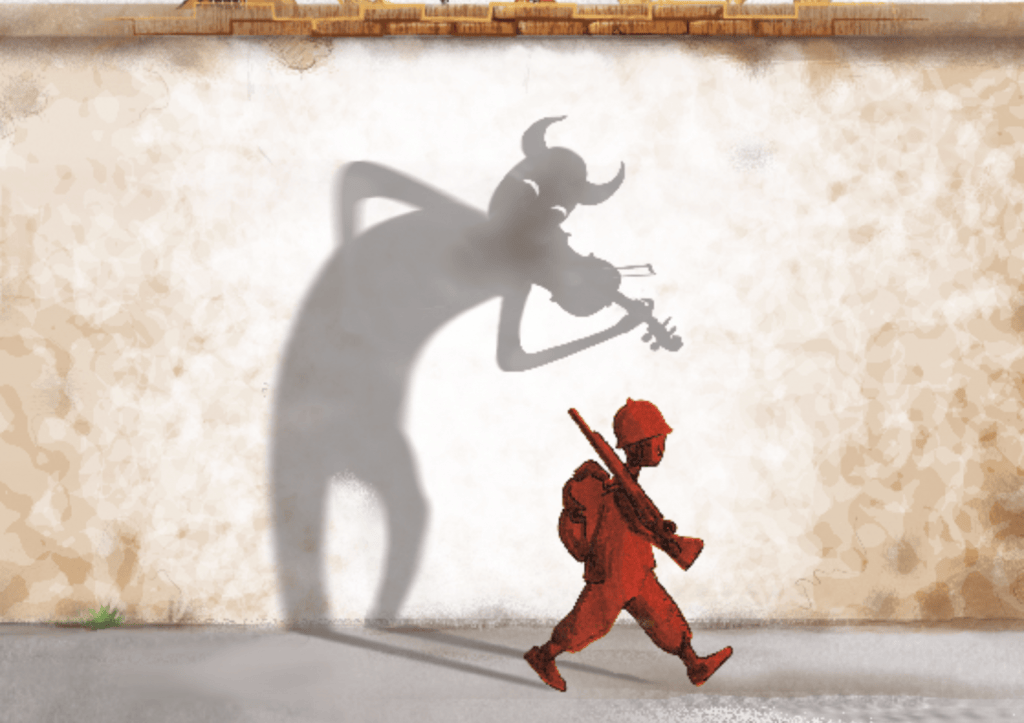
L’histoire du soldat is a fascinating chamber work composed for clarinet, bassoon, cornet, trombone, percussion, violin, double bass, and three actors. The actors are instructed to read and there is also an instruction to include dancers. The libretto was written in French by Charles Ferdinand Ramuz and is based on Alexander Afanasyev’s tale The Runaway Soldier and the Devil. There are virtuosic passages for all of the musicians, particularly the violin, and as Anthony Suter says, “The clever use of asymmetrical meters, incredibly complex syncopation, and intricate cross-rhythms lends a disjointed and incredibly interesting sense of time to the work.”
My classical music post for today is Igor Stravinsky’s L’histoire du soldat.


Leave a Reply