

The entertainment industry loves biopics. It doesn’t really matter if the details are exaggerated or just plain untrue: all that matters is telling a good story! Biopics about classical music composers and musicians can range from the mostly factual to out-and-out fanciful. This March, the Daily Classical Music Post will look at some of these films.
Rimsky-Korsakov: Scheherazade, Op. 35 – I. Largo e maestoso
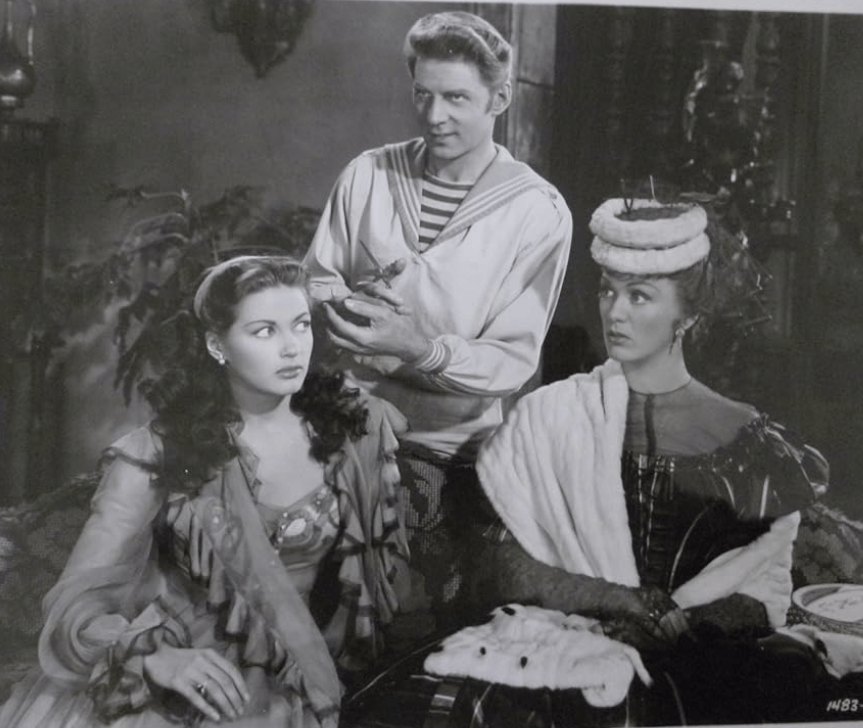
At least the writer and director of Song of Scheherazade (1947) was upfront and honest about the fact that the film depicted a completely imaginary and made-up event in the life of the Russian composer Nikolai Rimsky-Korsakov (1844–1908). While it is true that Rimsky-Korsakov was a career Russian Navy officer, he also was free to compose throughout his life and also indulge in his real love, literature. The main premise of Song of Scheherazade, however, is that the Navy won’t allow him to compose, so he has to kind of sneak around to write music. While in Tangiers, he begins to work on his famous symphonic suite Scheherazade (which in the film is a ballet, because of course it would be different), and he also meets a Spanish dancer with whom he falls in love.
Earlier this month, I mentioned that some composer biopics made during and just after World War II reflected the feelings at that time about different nationalities. As Russia was an ally of the United States of America, a film about a Russian composer was in fashion. Song of Scheherazade was a wild and exciting film in this vein. Jean-Pierre Aumont portrayed Rimsky-Korsakov (with a French accent, which distressed the rest of the cast, who all were American), Yvonne De Carlo was the invented Spanish dancer love interest, Eve Arden her mother, and the tenor Charles Kullman portrayed a tenor. Lots of Rimsky-Korsakov’s music was used, albeit in orchestrations by Miklós Rózsa and Eugene Zador, which is ironic given that Rimsky-Korsakov was one of the greatest orchestrators of all time.
The film was a success with audiences and totally panned by critics. One review in Variety said, “Story has a comic-opera flavor, and Walter Reisch’s direction of his own script often wavers in the treatment of plot elements and characters. Adding to ludicrous spots are a variety of accents, topped by the Broadwayese and 20th-century flippancy tossed into the 1865 period by Eve Arden.” Most people agreed that the best actor in the film was Brian Donlevy, who played the fictional captain of the ship on which Rimsky-Korsakov was serving. It was the end of Walter Reisch’s directing career in Hollywood, however.
My classical music post for today is Nikolai Rimsky-Korsakov’s Scheherazade, I: Largo e maestoso.


Leave a Reply