

The entertainment industry loves biopics. It doesn’t really matter if the details are exaggerated or just plain untrue: all that matters is telling a good story! Biopics about classical music composers and musicians can range from the mostly factual to out-and-out fanciful. This March, the Daily Classical Music Post will look at some of these films.
I imagine that the story of how the Italian-French Baroque composer and conductor Jean-Baptiste Lully (1632–1687) died is pretty well known to most fans of classical music, and maybe even to a wider audience. In case you don’t know, here’s a synopsis: In those days, there wasn’t a conductor of an orchestra per se. Either the first violin (still called the leader in some European orchestras) indicated tempo, starts and stops, etc., or someone stood in front of the orchestra and banged on the floor with a big stick. Lully was one of the latter, and it was in a rehearsal that he managed to bang the stick into his foot. Long story short, the wound got infected, gangrene developed, and Lully was no more.
But before that, he had quite the interesting life. He had known Louis XIV of France for most of Louis’ life, and Louis’ love of dancing led to him eventually appointing Lully court composer. Lully and his friend the poet and playwright Molière wrote many ballets specifically for the king. Louis used music and dance to create a show of strength and solidify his power over his kingdom. When Louis got older and wasn’t able to dance any more, he and Lully had a bit of a falling out, and Lully and Molière also stopped working together. But what had been created up to that point changed French classical music forever.
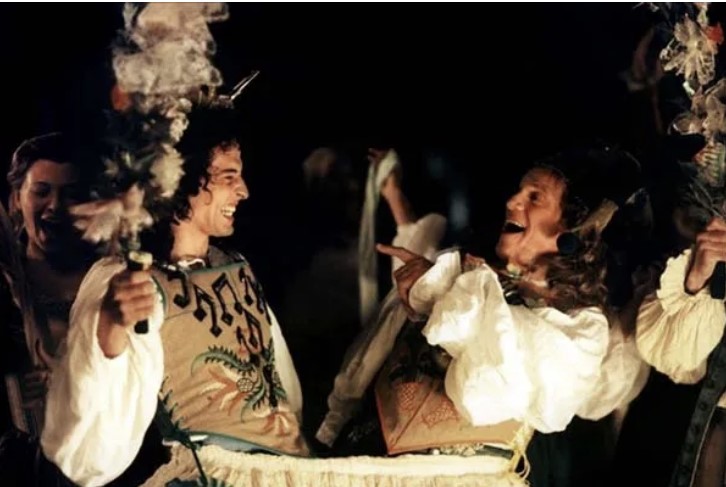
Le roi danse (The King Is Dancing, 2002) is a lavish, sometimes over-the-top, really pretty fun costume drama. The film begins with Lully on his deathbed recalling when he first met Louis, and remembering important events in their lives. Boris Terral is Lully, and he inhabits the role with gusto. Lully was married to a woman but also, as they say, very much “enjoyed the company of men,” and this biopic does not shy away from his bisexuality. Benoît Magimel does a great job transforming into the Sun King. Tchéky Karyo as Molière rounds out this little trio very nicely. There is lots of music by Lully, and also lots of dancing, so all in all this film is quite a treat.
Lisa Nesselson said, “Moliere and Louis have each been immortalized in several films, so filmmakers have opted to thrust Lully to the fore. The histrionic Terral (who played the cruel lover in Brigitte Rouan’s ‘Post coitum, animal triste’) makes Lully excitable, carnal and tortured, in contrast to Karyo’s older, more generous Moliere. Moliere gets the laughs; Lully provides the solemn spectacle and the hissy fits.” This is a pretty good assessment!
My classical music post for today is Jean-Baptiste Lully’s Les Folies d’Espagne.


Leave a Reply