

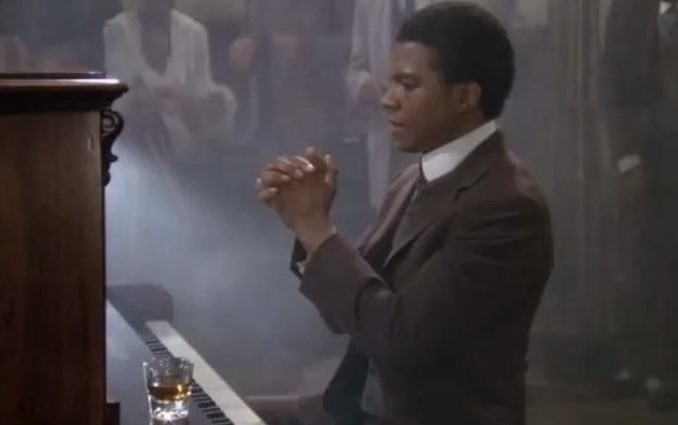
The entertainment industry loves biopics. It doesn’t really matter if the details are exaggerated or just plain untrue: all that matters is telling a good story! Biopics about classical music composers and musicians can range from the mostly factual to out-and-out fanciful. This March, the Daily Classical Music Post will look at some of these films.
Joplin: Treemonisha / Act one – No. 1 Overture
The American composer and pianist Scott Joplin (c. 1868–1917), known as the King of Ragtime, had a really difficult life, so it’s not surprising that one reviewer of the 1977 biopic Scott Joplin said, “the story of Joplin’s life is so grim it makes the film a real downer.”
Joplin considered ragtime to be a form of classical music intended for concert halls, but because for the most part it was only performed in saloons, he was forced to play in brothels in order to make a living. That’s probably how, before he began to have more success, he contracted syphilis, which is what killed him at the age of 48.
The movie doesn’t gloss over Joplin’s deterioration, and Billy Dee Williams gives a good performance (given the turgid screenplay) of a musical genius desperate to make his mark in the classical world. But there are some interesting—read: fanciful—additions and omissions. The composer Louis Chauvin is portrayed as one of the most important friendships of Joplin’s life, but the fact is that they barely knew each other, although the movie does get their collaboration on “Heliotrope Bouquet” right. On the other hand, the composer Scott Hayden, who was a piano student of Joplin’s and became a good friend and frequent collaborator, is not mentioned at all. Why do filmmakers do this?
There is nowhere near enough of Joplin’s music in the film, and when it is performed, it’s in arrangements by Richard Hyman. The latter part of the film is meant to be about the composition of Treemonisha, his second opera. Joplin did not live to see a proper staging of Treemonisha. The first professional production did not take place until 1975, when the Houston Grand Opera presented a production with orchestration by Gunther Schuller. And in 1976, Joplin was posthumously awarded a Pulitzer Prize in music for Treemonisha. Was this the reason why Scott Joplin was made in 1977? It would be really wonderful if there could be a much better movie about the life of this incredible composer.
My classical music post for today is Scott Joplin’s Treemonisha, Act 1, No. 1: Overture.


Leave a Reply