

The entertainment industry loves biopics. It doesn’t really matter if the details are exaggerated or just plain untrue: all that matters is telling a good story! Biopics about classical music composers and musicians can range from the mostly factual to out-and-out fanciful. This March, the Daily Classical Music Post will look at some of these films.
Violin Concerto in G Major, Op. 8, No. 2: I. Allegro (From “Chevalier”/Visualizer Video)
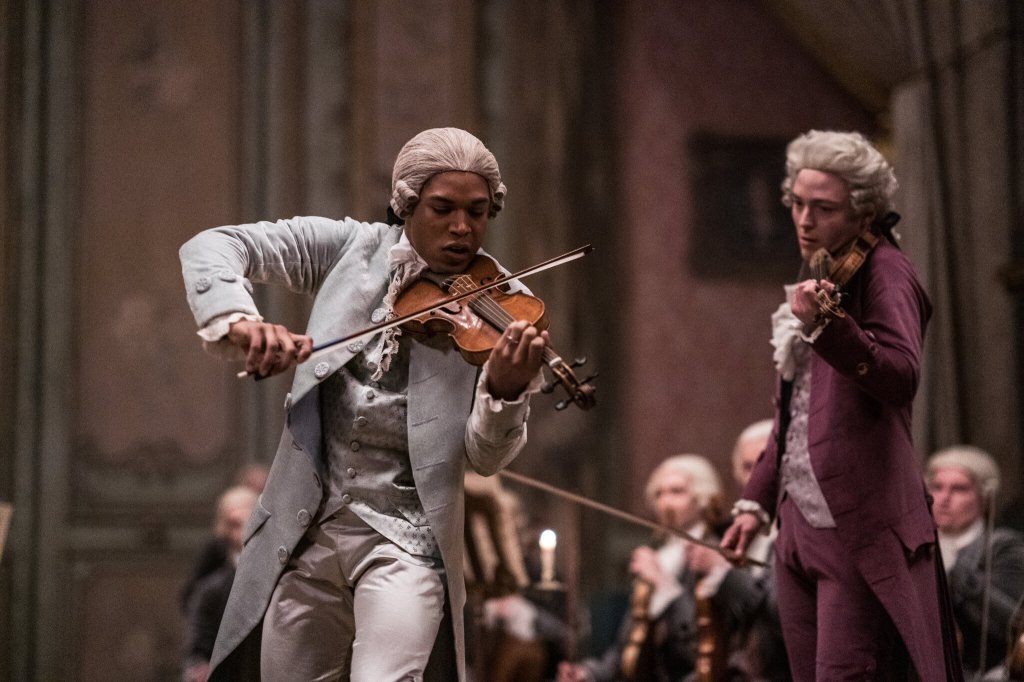
The rediscovery of the extraordinary composer, musician, and fencer Joseph Bologne, Chevalier de Saint-Georges (1745–1799) was greatly helped by the 2022 biopic Chevalier. This film, with Kelvin Harrison Jr in the title role, was mostly well received.
Much of Bologne’s music was lost and manuscripts were destroyed when he was banned by Napoleon Bonaparte, so for the film most of the soundtrack was “reconstituted” by Michael Abels, along with newly composed music by Kris Bowers. Music by Alessandro Scarlatti was also featured in one scene. It’s sad that so little of the film actually has music by Bologne.
One of the most fanciful scenes is right at the beginning of the film. Wolfgang Amadeus Mozart is in Paris and is on stage performing his Violin Concerto No. 5. Bologna steps up and asks to play, and an 18th-century “Dueling Banjos”–type play-off ensues. Things get totally out of control, and, as Abels described it, “Joseph shows up and outplays [Mozart]. It was important to write in the style of Joseph, which was classical, but also showy. The Joseph solos take on a modern, Jimi-Hendrix style tone so the music reflects what we’d expect to hear in that situation.” Yeah, those 18th-century Parisians really loved Hendrix.
Needless to say, none of this ever happened. There is no evidence whatsoever that Mozart and Bologne ever met, much less had this kind of encounter. Still, it made for a very exciting opening to what was, for the most part, a pretty good biopic of an important but mostly unknown 18th-century composer.
My classical music post for today is Joseph Bologne’s Violin Concerto in G major, Op. 8, No. 2: I. Allegro.


Leave a Reply