

Thank you to everyone who subscribes to and supports the DCMP. This January, I will be sharing some of the more popular posts from 2022 and 2023. A new theme will begin in February!
[First published 15 January 2023]
“If you were a country, what would your national anthem be?”—David Levithan
I don’t know about you, but one of my favourite things about the FIFA World Cup 2022 was hearing some national anthems that I had never heard before as well as some that I rarely hear. As the competition went on, I began to wonder how some of the anthems came about. How did each country choose its national anthem? Was it newly composed or taken from something already in existence? This January, the Daily Classical Music Post will attempt to answer some of these questions.
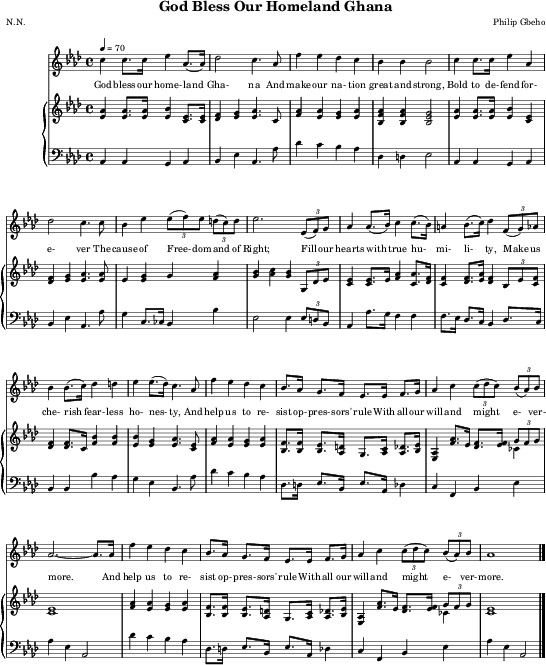
GHANA NATIONAL ANTHEM (ALL 3 STANZAS) -Composed by Phillip Gbeho
We continue our exploration of the anthems of the countries represented in the 2022 FIFA World Cup (minus the United States), in alphabetical order.
“God Bless Our Homeland Ghana” was written by the Ghanaian composer Philip Gbebo (1904–1976). Gbebo helped to establish the Arts Council of Ghana and was Director of Music of the Ghanaian National Symphony Orchestra. The original lyrics were written by Emmanuel Pappoe-Thompson, although they were revised as part of a competition in the 1970s, which was won by Michael Kwame Gbordzoe.
There is actually an unofficial national anthem, composed by ethnomusicologist Ephraim Amu. “Yɛn Ara Asaase Ni” was composed in 1929. It was one of the entries in the competition that Gbebo won, and although it isn’t recognized or sung at any formal events, it is sung in schools throughout Ghana.
This anthem is quite emotional, even with the driving beat and general dynamic of fortissimo. The vocal range is not so wide as to make it hard for people to sing. I can see why people say it fills them with pride.
My (somewhat) classical music post for today is the Ghanaian national anthem, “God Bless Our Homeland Ghana.”


Leave a Reply