

Richard Strauss: “Dance of the Seven Veils” from Salome
In September 2023, North Carolina classical radio station WCPE created an uproar when the music director announced that they would ban broadcasts of several operas being performed by the Metropolitan Opera. It didn’t take many weeks for that decision to be reversed. Sometimes, however, it takes years or even generations for composers and music that has been banned to be heard. This November, the Daily Classical Music Post will look at some music that was banned for a wide variety of reasons.
Maria Ewing – Tanz der sieben Schleier (Salome)
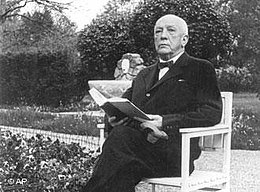
The German composer Richard Strauss (1864–1949) has a reputation for being a Nazi apologist, but in fact he was apolitical and also worked behind the scenes to protect and save the lives of his Jewish daughter-in-law and grandchildren. He insisted on employing a Jewish librettist for one of his operas, and this led to his firing as head of the Reichsmusikkammer. Some of his music indirectly criticized the Nazi Party.
But perhaps his most controversial work, one that led to his music being banned in several countries for many years, was his third opera, Salome. Although the opera was a great triumph after it premiered in 1905, the combination of the Christian biblical theme, the erotic nature of the relationships among Salome, Herod, and John the Baptist, and the murderous plot shocked audiences. In particular, the “Dance of the Seven Veils” was so titillating that some sopranos refused to perform it. In addition, the censors in Vienna and London refused to allow the opera to be performed in those cities for several years.
Calvin Dotsey said, “After a rhythmic, percussive introduction, the music reveals the princess’s inner world as she reveals her body. Twisted harmonies and melodies show us her disgust for her stepfather and her desire for the imprisoned mystic. As each veil is dropped, Salome descends further into madness, and the music builds to a frenetic climax. Before the last veil is removed, the music pauses and we hear the leitmotif representing the glinting moonlight as Salome’s mind drifts—but her reverie is cut short as the dance comes to a crashing end.”
One of the most famous (and notorious) Salomes of recent history was the great dramatic soprano Maria Ewing. Her performance of the “Dance of the Seven Veils” in 1986 in Los Angeles is legendary; the production (directed by her then husband Sir Peter Hall) was also seen in Chicago and London (where, incidentally, I saw it at the Royal Opera House). The video I’ve shared today is from the Royal Opera House production.
My classical music post for today is Richard Strauss’s “Dance of the Seven Veils” from Salome.


Leave a Reply