

William Byrd: Mass for Four Voices: Credo
In September 2023, North Carolina classical radio station WCPE created an uproar when the music director announced that they would ban broadcasts of several operas being performed by the Metropolitan Opera. It didn’t take many weeks for that decision to be reversed. Sometimes, however, it takes years or even generations for composers and music that has been banned to be heard. This November, the Daily Classical Music Post will look at some music that was banned for a wide variety of reasons.
Byrd: Mass for Four Voices – Credo (Remastered 2015)
It was not a good thing to be a Catholic in Elizabethan England. The Act of Supremacy of 1558 made a few small concessions to Catholics but basically reestablished the independence of the Church of England from the Church of Rome. Music composed for the Anglican Church was meant to be in English rather than Latin, and simpler settings rather than very florid polyphony was favoured.
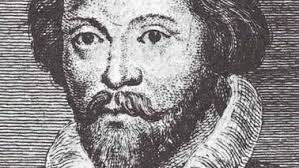
The English Renaissance composer William Byrd (1540–1623) was a Catholic recusant, but he managed somehow to keep his beliefs hidden, for the most part, although he was on recusancy lists. His membership in the Chapel Royal was suspended for a while and restrictions were placed on his movements. He somehow avoided arrest, although he did not stop composing sacred music for his circle of Catholic friends. Although his music wasn’t formally banned, he was to some extent forgotten for 300 years until the music that he kept hidden was “rediscovered.”
One of Byrd’s most beautiful compositions is his Mass for Four Voices, composed in 1592. He set the Ordinary of the Mass—Kyrie, Gloria, Credo, Sanctus and Benedictus, and Agnus Dei—three times, for three, four, and five voices, but in many ways the four-voice version is the most representative of his religious beliefs. Charles Latham Hill said, “The Credo of Byrd’s Mass for Four Voices . . . begins imitatively with the exception of the two phrases beginning ‘Crucifixus’ and ‘Et in spiritum sanctum’. . . . In measures 88 and 89, the word ‘Catholicam’ is set twice homophonically.” Byrd was leaving us in no doubt about what he was saying. I’ve actually found it pretty thrilling to sing this Mass setting, particularly because of that moment.
My classical music post for today is William Byrd’s Mass for Four Voices: Credo.


Leave a Reply