

Antonio Vivaldi: Arsilda, regina di Ponto: Act 1, Scene 2, “Io sento in questo seno”
In September 2023, North Carolina classical radio station WCPE created an uproar when the music director announced that they would ban broadcasts of several operas being performed by the Metropolitan Opera. It didn’t take many weeks for that decision to be reversed. Sometimes, however, it takes years or even generations for composers and music that has been banned to be heard. This November, the Daily Classical Music Post will look at some music that was banned for a wide variety of reasons.
Vivaldi: Arsilda Regina di Ponto R.700 (1716) / Act 1, Scène 2 – Io sento in questo seno
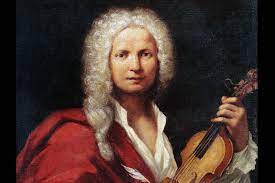
Say the name Antonio Vivaldi (1678–1741), and the totally uncontroversial Four Seasons immediately comes to mind. But Vivaldi was not immune to censorship; part of this might have been because, as Robert Greenberg said, Vivaldi was “an egomaniacal, opportunistic, thin-skinned, greedy, often outrageously dishonest wheeler-dealer.” The main reason why Vivaldi died in poverty was because the archbishop of the Catholic Church in Ferrara banned the performance of one of his operas, Il Farnace, partly because Vivaldi had a relationship with one of the singers, and this pretty much ruined him.
Il Farnace was not the only one of Vivaldi’s operas to be banned. The three-act opera Arsilda, regina di Ponto, more correctly a dramma per musica, was censored because of the subject matter. John Wall said, “Arsilda undoubtedly was one of Vivaldi’s best early operas. It contains nearly all of the elements of a Venetian opera described in Benedetto Marcello’s ‘Il Teatro alla Moda’, published only four years later in 1720. The libretto, by the Neapolitan fugitive Domenico Lalli, who wrote or edited five other libretti used by Vivaldi, features a woman (Lisea) disguised as her male twin (Tamese) who marries the prima donna (Arsilda) before the real Tamese returns and reveals his identity.” Everything works out in the end, but even the thought of a woman potentially falling in love with another woman . . . well, that just didn’t go over well.
Vivaldi managed to get the ban overturned after a year, and once Arsilda was performed in Venice in 1716, it was a great success. He composed several other operas after that, some of which were dismissed by more conservative musicians of the day, including the afore-mentioned Benedetto Marcello, who actually wrote pamphlets denouncing Vivaldi and his operas.
In Act 1, Scene 2, Arsilda sings an aria about her love for Tamese, “Io sento in questo seno” (I feel in this breast). This is a beautiful, haunting aria for a contralto. There are so many twists and turns in this quite unbelievable story, but the music makes all that convoluted nonsense recede into the background.
My classical music post for today is Antonio Vivaldi’s Arsilda, regina di Ponto: Act 1, Scene 2, “Io sento in questo seno.”


Leave a Reply