

Erwin Schulhoff: “Symphonia Germanica”
In September 2023, North Carolina classical radio station WCPE created an uproar when the music director announced that they would ban broadcasts of several operas being performed by the Metropolitan Opera. It didn’t take many weeks for that decision to be reversed. Sometimes, however, it takes years or even generations for composers and music that has been banned to be heard. This November, the Daily Classical Music Post will look at some music that was banned for a wide variety of reasons.
Erwin Schulhoff – Symphonia Germanica (1919)
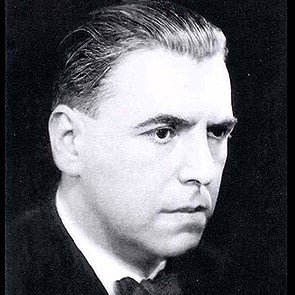
The Austro-Czech composer Erwin Schulhoff (1894–1942) was an innovator, a visionary, and very successful and popular as a performer in Austria, the Czech Republic, and Germany in the early 20th century and the period between the two world wars. Derek Katz said that Schulhoff was “a German Jew in a Czech cultural milieu, [who] took full advantage of his ‘outsider looking in’ status to forge a compelling musical personality.” Schulhoff helped to organize the first Dada event in Dresden, and he was always looking to break down barriers and boundaries between music and the other arts.
Schulhoff was a communist, and as he also had Jewish roots, he was targeted by the Nazis almost as soon as the Germans invaded the Czech lands in 1938. His music was immediately labeled by the Nazis as “degenerate” and was banned. Schulhoff tried to emigrate to the United Kingdom, France, or the United States, but none of these countries would take him in. He finally received permission to emigrate to the Soviet Union just before the Nazis invaded there. Before he and his family could move, though, he was arrested in Prague for being a Soviet citizen (of less than two months!) and was sent to a concentration camp in Bavaria, where he died.
The notes accompanying today’s selection say, “‘Symphonia Germanica’, composed in 1919 around the time of or shortly after the Treaty of Versailles, lampoons the fervent revanchist sentiments common during the postprimomundibellum Weimar Republic in which he lived. It consists of either a drunk or a madman, frothing at his mouth, wildly singing the nationalist song ‘Deutschlandlied’ (the melody was written by Joseph Haydn and was used by the Austro-Hungarian Empire as its national anthem until 1918). . . . In the background, various chaotic sounds are made by the performer to generate as much noise as possible. The scattered and chaotic appearances of other anthems also figure, including ‘La Marseillaise’ and ‘God Save the King’.” This is a shocking and also provocative work from a voice that was silenced in the 1930s and is still to be rediscovered almost 100 years later.
My classical music post for today is Erwin Schulhoff’s “Symphonia Germanica.”


Leave a Reply