

Aaron Copland: Lincoln Portrait
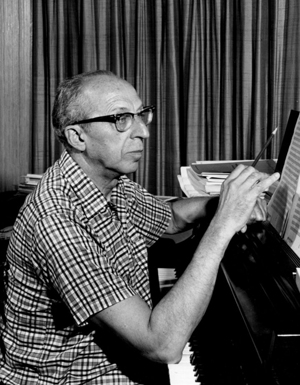
In September 2023, North Carolina classical radio station WCPE created an uproar when the music director announced that they would ban broadcasts of several operas being performed by the Metropolitan Opera. It didn’t take many weeks for that decision to be reversed. Sometimes, however, it takes years or even generations for composers and music that has been banned to be heard. This November, the Daily Classical Music Post will look at some music that was banned for a wide variety of reasons.
Copland: Lincoln Portrait – Phylicia Rashad and the National Symphony Orchestra
Much of the music by the American composer Aaron Copland (1900–1990) epitomises the United States of the 19th century: works such as Rodeo, Billy the Kid, and Appalachian Spring are instantly recognisable and immediately bring to mind the landscape and people of that era. However, Copland was accused of being a Communist during the McCarthy witch-hunts of the 1950s, and he was blacklisted and his music banned from performance; his passport also was revoked. Even after the McCarthy era was over, it was difficult for Copland to recover from this.
One of the most egregious bans involved what many consider to be Copland’s finest and most popular work, Lincoln Portrait (composed in 1942). This orchestral work includes sections from the speeches of Abraham Lincoln, including the Gettysburg Address, and when it is performed the narrator is often someone prominent.
Lincoln Portrait was on the National Symphony programme for the January 1953 inauguration of Republican President Dwight Eisenhower. However, just a few days before the performance, Republican Representative Fred Busby (Illinois) vociferously protested the use of music by Copland, due to what he called Copland’s “suspect political affiliations.” The chairman of the inauguration committee immediately dropped the piece from the program, saying, “We don’t want to do anything that would bring criticism.” Sounds familiar, huh?
Marianne Ward said, “In 1977, I had to deal with my own unexpected ‘controversy’ over Copland’s Lincoln Portrait, which I’d planned to program on my youth concerts with the Richmond Symphony Orchestra. . . . I was told by an executive there that I was ‘crazy’ for wanting to perform this work—in the capitol of the Confederacy! I was astonished, and I protested, but that was a battle I lost.”
Copland said, “The composition is roughly divided into three main sections. In the opening section I wanted to suggest something of the mysterious sense of fatality that surrounds Lincoln’s personality. Also, near the end of that section, something of his gentleness and simplicity of spirit. The quick middle section briefly sketches in the background of the times he lived. This merges into the concluding section where my sole purpose was to draw a simple but impressive frame about the words of Lincoln himself.”
My classical music post for today is Aaron Copland’s Lincoln Portrait.


Leave a Reply