

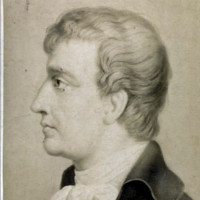
Claude Joseph Rouget de Lisle: “La Marseillaise”
In September 2023, North Carolina classical radio station WCPE created an uproar when the music director announced that they would ban broadcasts of several operas being performed by the Metropolitan Opera. It didn’t take many weeks for that decision to be reversed. Sometimes, however, it takes years or even generations for composers and music that has been banned to be heard. This November, the Daily Classical Music Post will look at some music that was banned for a wide variety of reasons.
National Anthem: France – La Marseillaise (New Version)
“La Marseillaise” must be one of the most recognizable anthems in the world. Even people who don’t know a word of French sing along. It’s that kind of tune. Given the violent nature of the words—this is all about the invasion of France by Prussian and Austrian armies, and there’s talk of bloody flags, bloody battlefields, basically a lot of blood—it’s probably better NOT to know what it’s all about.
Claude Joseph Rouget de Lisle (1760–1836), who wrote the music and the lyrics to “La Marseillaise” in 1792, was an army officer, not a professional musician. Yet somehow he managed to write a song that captures everything that an anthem needs: singable tune, stirring words (stirring to the French, anyway), and uplifting sentiments (again, uplifting to the French). The anthem was originally called “Chant de guerre pour l’Armée du Rhin”; it quickly became known as “La Marseillaise” because it was sung by military volunteers from Marseille when they marched on Paris. It was adopted as the national anthem in 1795, all seven verses of it. Usually only the first verse and chorus are sung.
“La Marseillaise” was banned by Napoleon in 1804 and then again by Louis XVIII during the Second Restoration in 1815 because of its revolutionary associations. It gained favour again after the July Revolution of 1830, but then it was again banned by Napoleon III and not reinstated until 1879. The tune appears in works by many composers, including Ludwig van Beethoven (Wellington’s Victory Overture), Giuseppe Verdi (Hymn of the Nations), Edward Elgar (The Music Makers), Robert Schumann (Faschingsschwank aus Wien), and Pyotr Ilyich Tchaikovsky (1812 Overture). The Beatles famously used the opening fanfare in “All You Need Is Love” but the reason why is unclear; they probably just liked how it sounded.
My classical music post for today is Claude Joseph Rouget de Lisle’s “La Marseillaise.”


Leave a Reply