

Ludwig van Beethoven: 33 Variations on a Waltz by Anton Diabelli
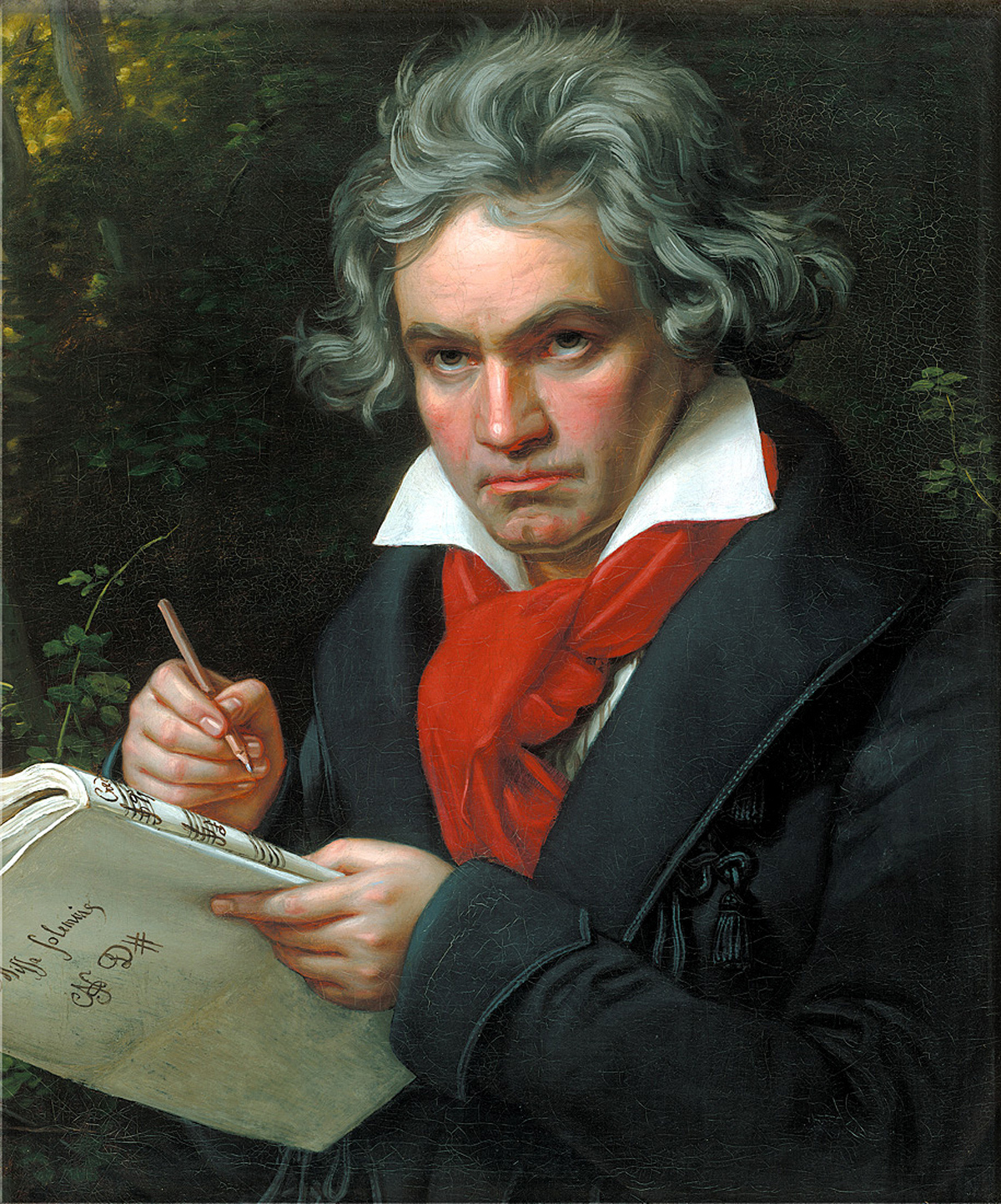
Oscar Wilde famously said, “Imitation is the sincerest form of flattery that mediocrity can pay to greatness.” It isn’t always the case, at least in classical music, that the imitator is mediocre; many compositions that are based on another composer’s work are just as interesting—and sometimes even more interesting—than the original. This October, the Daily Classical Music Post will look at variations, fantasias, and other compositions that are based on another composer’s work.
Diabelli Variations, Op. 120 (Live)
The late-18th-/early-19th-century composer Anton Diabelli was better known in his lifetime as a publisher; his catalogue included music by the Strausses as well as Franz Schubert. Diabelli composed an operetta, several masses, songs, piano pieces, and works for classical guitar. But he is most famous as a composer for his waltz that was the basis of the 33 Variations on a waltz by Anton Diabelli, Op. 120, also called the Diabelli Variations, composed between 1819 and 1823 by Ludwig van Beethoven (1770–1827).
In 1819, Diabelli composed a waltz and came up with the idea to publish one variation by every important Austrian composer living at the time (and also some non-Austrians). The plan was to publish all of the variations in one volume. Fifty-one composers were invited to compose a variation (among them, Schubert, Carl Czerny, Johann Nepomuk Hummel, and Franz Liszt, who was only 8 years old at the time). Beethoven was not satisfied with writing just one variation and in the end composed 33. Diabelli published Beethoven’s composition in one volume and the variations by the other 50 composers in a subsequent volume.
The Diabelli Variations are considered to be one of Beethoven’s greatest works as well as perhaps the greatest variations ever composed. William Kinderman said, “Diabelli’s waltz is treated first ironically as a march that is half-stilted, half-impressive, and then, at crucial points in the form, twice recapitulated in amusing caricature variations. At the conclusion of the work, in the Fugue and last variation, reference to the melodic head of Diabelli’s theme once again becomes explicit—indeed, it is hammered into the ground. But any further sense of the original context of the waltz is lacking. By means of three parody variations, 1, 15, and 25, Beethoven established a series of periodic references to the waltz that draw it more closely into the inner workings of the set, and the last of these gives rise to a progression that transcends the theme once and for all. That is the central idea of the Diabelli Variations.” The structure of the Diabelli Variations is similar to sonata-allegro form, and there are three clear sections: Variations 1–10, 11–24, and 25–33.
My classical music post for today is Ludwig van Beethoven’s 33 Variations on a Waltz by Anton Diabelli.


Leave a Reply