

Josquin des Prez: Missa L’homme armé sexti toni: Agnus dei III
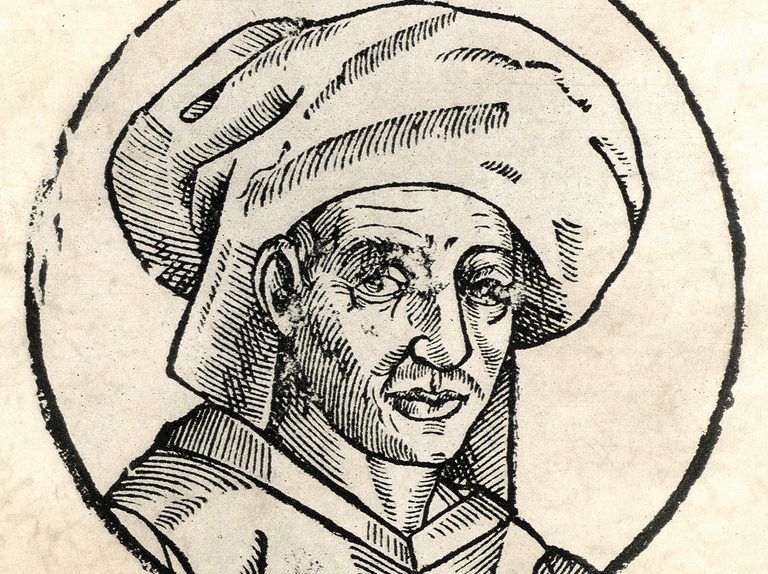
Oscar Wilde famously said, “Imitation is the sincerest form of flattery that mediocrity can pay to greatness.” It isn’t always the case, at least in classical music, that the imitator is mediocre; many compositions that are based on another composer’s work are just as interesting—and sometimes even more interesting—than the original. This October, the Daily Classical Music Post will look at variations, fantasias, and other compositions that are based on another composer’s work.
Josquin: Missa L’homme Armé Sexti Toni – 5c. Agnus Dei 3
The Late Middle Ages was a wonderful time in music, particularly in the region around northern and eastern France, Belgium, and the Netherlands. The group of composers who were most active at that time included lots of big names from music history, including Guillaume Dufay, Gilles Binchois, John Dunstaple, and Antoine Busnois. Sacred song composition flourished during this time, but also secular songs were popular and widely known by people who heard travelling musicians sing them.
One of the most popular songs of the time was L’homme armé. No one is entirely sure who composed the song, which could refer either to St Michael the Archangel or some anonymous Crusader. In any event, the tune became so popular that many Renaissance composers used the tune as a basis (cantus firmus) for Mass settings.
The Franco-Flemish Renaissance composer Josquin des Prez (c. 1450–1521) composed two of the best-known masses based on L’homme armé. The second one, Missa L’homme armé sexti toni, was published in 1502. “Sexti toni” refers to the use of the sixth Gregorian mode, the Hypolydian. Josquin used the paraphrase technique of composition, which means that the L’homme armé tune appears in all of the voices. Several of Josquin’s other mass settings are paraphrase masses, including his most famous, the Missa pangua lingua, which is an extended fantasia on Thomas Aquinas’ hymn for Corpus Christi.
Josquin transposed L’homme armé to make the final note F rather than G. Peter Phillips says, “[I]n Sexti toni we find [the theme] broken into often unrecognizable fragments, dispersed among all four voices. . . . Sexti toni is filled with duets, its vocal texture kept light and informal through the use of sequences and imitation. . . . Sexti toni’s canons give the impression of being easy-going, especially the sublime 6-voice Agnus Dei III. This setting is like a fantasia on the theme.” Josquin’s brilliance as a composer is particularly noticeable in the third Agnus: “Josquin seems to have been the first to notice that parts of the armed man melody could be quoted in its original form and in retrograde at the same time (assuming note-lengths, rests, and ficta—that is accidentals—between the phrases were a bit malleable). This is what the lowest two voices of his third Agnus are doing: in the first half of the piece the tenor sings the whole of the verse in long notes. At the same time (more or less) the bass sings the whole of the refrain in long notes in retrograde. At the half-way point they cross over: the tenor now sings the whole of the verse in retrograde to the end, and the bass sings the whole of the refrain in its original form to the end. As a result, the music that they have created before the halfway point is exactly repeated in the second half, but backwards. So, the first bar is the same as the last bar, the second the same as the second-last, and so on.”
My classical music post for today is Josquin des Prez’s Missa L’homme armé sexti toni: Agnus dei III.


Leave a Reply