

Paul Hindemith: Symphonic Metamorphosis of Themes by Carl Maria von Weber: 3. Andantino
Oscar Wilde famously said, “Imitation is the sincerest form of flattery that mediocrity can pay to greatness.” It isn’t always the case, at least in classical music, that the imitator is mediocre; many compositions that are based on another composer’s work are just as interesting—and sometimes even more interesting—than the original. This October, the Daily Classical Music Post will look at variations, fantasias, and other compositions that are based on another composer’s work.
Hindemith: Symphonic Metamorphoses on Themes by Carl Maria von Weber – 3. Andantino
Carl Maria von Weber is one of the most famous German Romantic opera composers. Der Freischütz is significant in the history of German, and all, opera, but he also composed many other operas as well as some symphonies, concertos, incidental music, and piano pieces. Composers including Richard Wagner, Felix Mendelssohn, and Franz Liszt were influenced by him.
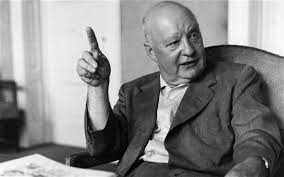
The German composer Paul Hindemith (1895–1963) studied Weber’s music and had the idea to compose an arrangement of some of it for a ballet. That initial idea did not come to fruition; instead, Hindemith decided to compose a large-scale work for orchestra, which became the Symphonic Metamorphosis of Themes by Carl Maria von Weber. The themes were taken from incidental music that Weber had written for a play by Carlo Gozzi, based on the Turandot legend as well as music from three of Weber’s more obscure piano works for four hands.
A review of the premiere of the work in the New York Times called it, “a novelty … [which] was one of the most entertaining scores that he has thus far given us, a real jeu d’esprit by a great master of his medium in a singularly happy mood.” Interestingly, George Ballachine choreographed the music for the New York City Ballet, so it ended up being a ballet in the end! Alex Burns said, “The slow third movement is based on Weber’s Piano Duet Op. 3 No. 2. The serenity within this movement is more than welcome after the tumultuous second movement. The melodies are smoother, the rhythms are set in a balanced 2 throughout most of the movement. The upper woodwinds glimmer like sunshine throughout, and the complex harmonic accompaniment supports this.”
My classical music post for today is Paul Hindemith’s Symphonic Metamorphosis of Themes by Carl Maria von Weber: 3. Andantino.


Leave a Reply