

György Ligeti: Poème symphonique
September is a month of unusual holidays, including “No Rhyme, No Reason Day,” “Wonderful Weirdos Day,” “Ceiling Fan Day,” and “Punctuation Day” (a personal favourite). To celebrate unusual holidays, this September the Daily Classical Music Post will explore music composed for unusual instruments either in ensembles or featured in a soloist capacity.
Poème Symphonique for 100 Metronomes
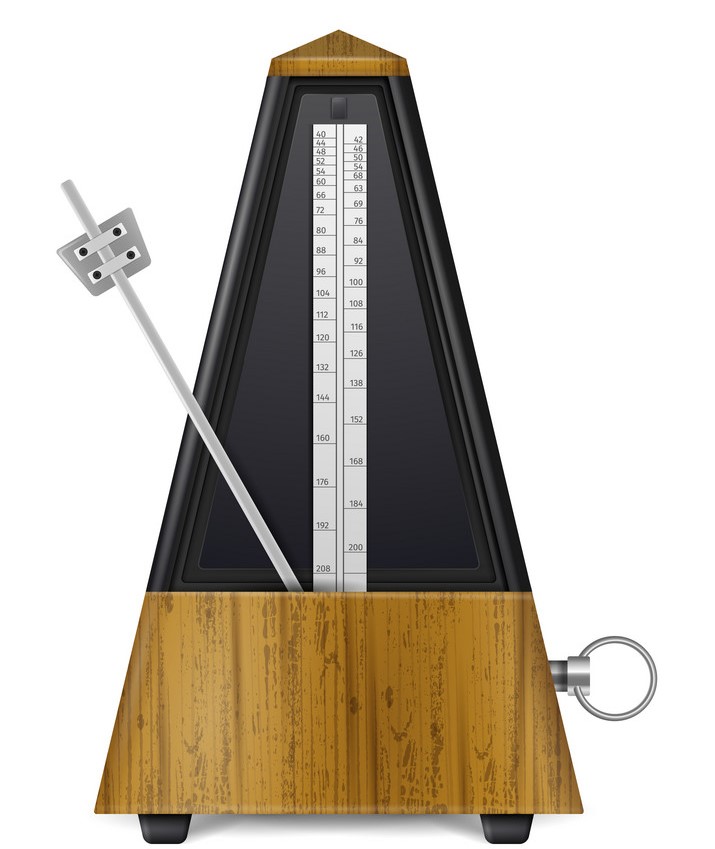
Every musician loves to hate the metronome. This device is set to click or make some type of sound at regular intervals to help improve timing or rhythm. When practising very difficult pieces, it’s common to begin at a slow tempo, resetting the metronome bit by bit as the passages are mastered (at least, this is the hope). Mechanical metronomes have one volume but digital and online ones can be adjusted. Etudes often have a metronome marking that is just a source of frustration, but it’s good to have a goal!
So, although the metronome is used in practice, it’s not an instrument. Or is it? In 1911, Maurice Ravel used three metronomes in the opening of his opera L’heure espagnole. Toshi Ichiyanagi composed Music for Electric Metronomes in 1960. But perhaps the most famous use of metronomes in a classical work is György Ligeti’s (1923–2006) Poème symphonique for 100 metronomes (1962).
This piece is performed by 10 people, each responsible for 10 mechanical metronomes. The metronomes are fully wound up at the start of the work, and following a brief silence (around five minutes or so), they all start playing at the same time but at different speeds. Once they are all going, the performers leave the stage. One by one, the metronomes stop working when they wind down, and at the end of the work, just one metronome is left playing. At that point, the performers come back on stage.
The first planned broadcast was cancelled following a controversy over the piece. Ligeti said at the time, “It is no accident that Poème Symphonique was rejected as much by the petit-bourgeois (see the cancellation of the TV broadcast in the Netherlands) as by the seeming radicals. … Radicalism and petit-bourgeois attitudes are not so far from one another; both wear the blinkers of the narrow-minded.”
My classical music post for today is György Ligeti’s Poème symphonique.


Leave a Reply