

Augusta Holmès: Andromède
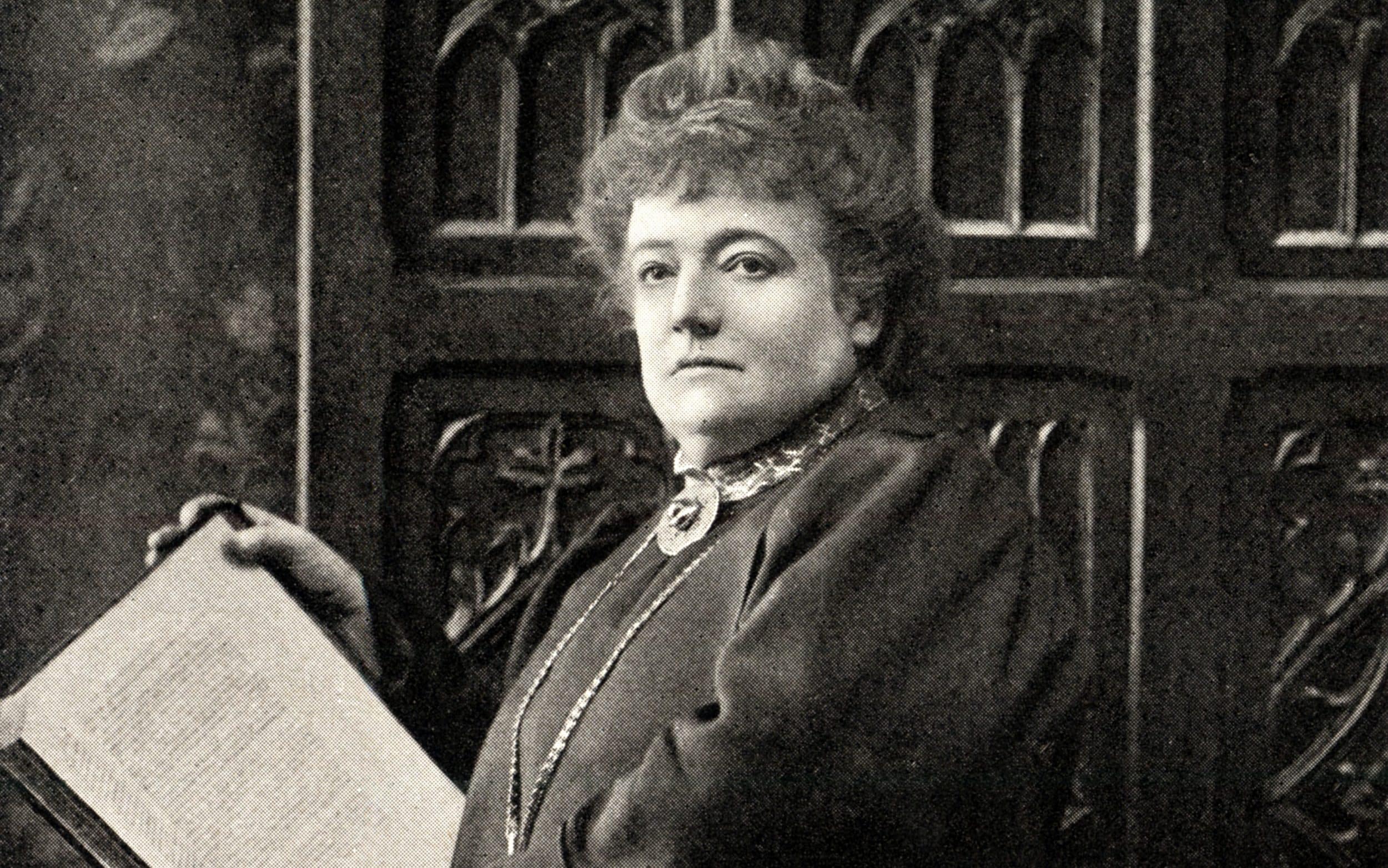
“That no woman has ever been a great composer is an accepted fact; that she is never likely to become so, more than a probability.”—Anonymous, The Musical Times (1887)
This May, the Daily Classical Music Post will set the record straight. There have been many great women composers, and I’m going to introduce you to just 31 of them and their wonderful music.
Augusta Holmès – Andromède, symphonic poem (1883)
The French composer Augusta Holmès (1847–1903) was actually of Irish descent, although she was born in Paris; in 1871, she became a French citizen and added the accent to her last name.
She wrote many songs and oratorios, usually to lyrics that she wrote herself. She also wrote the libretto to her opera La Montagne Noire. Because she was a woman, she could not study at the Paris Conservatoire, but she did take composition lessons privately with César Franck. Apparently, Franck had some romantic feelings for Holmès, which he incorporated into his Piano Quintet.
The French composer Camille Saint-Saëns said of Holmès: “Like children, women have no idea of obstacles; and their will-power breaks all barriers. Mademoiselle Holmès is a woman, an extremist.” Among Holmès’s many friends and supporters were Franz Liszt, Richard Wagner, and Vincent d’Indy, and Saint-Saëns asked her to marry him many times. She never married, but she was the lover of the French poet Catulle Catulle Mendès, with whom she had four children. She also had a fifth child, but she never revealed who the father was.
Holmès first published under the pseudonym Hermann Zenta. Once she began publishing her works under her own name, she achieved fame and was recognised in her lifetime as a fresh voice in the French musical world. She wrote instrumental as well as vocal works. One composition of hers that I would love to hear is her Ode Triomphale, a piece that she wrote in 1899 for a chorus of 900 and an orchestra of 300, which was performed four times during the Paris Exhibition that year.
Lionel Salter said this about Andromède, one of the symphonic poems that Holmès composed in 1882–1883: “There is nothing in the least ‘feminine’ (if one may use that word in these politically correct times) about the challenge flung out by the brass at the start of Andromede or the heroically energetic thrust that follows it—which seem to depict Perseus rather than the unhappy legendary heroine of the title, who is represented musically, in broad lyrical phrases, only in the closing section of the work. Its one weakness is an over-use of the Franckian trick of repeating short phrases successively a tone higher each time.”
My classical music post for today is Augusta Holmès’ Andromède.


Leave a Reply