

Amanda Aldridge: Four Moorish Pictures, I: Prayer Before Battle
“That no woman has ever been a great composer is an accepted fact; that she is never likely to become so, more than a probability.”—Anonymous, The Musical Times (1887)
This May, the Daily Classical Music Post will set the record straight. There have been many great women composers, and I’m going to introduce you to just 31 of them and their wonderful music.
Montague Ring/Amanda Aldridge – Four Moorish Pictures: “I – Prayer Before Battle” -Siobhán O’Neil
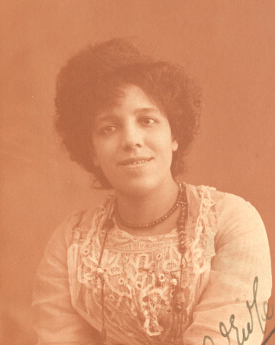
It’s not all that easy to find recordings of music by Amanda Aldridge (1866–1956), even when you know that she composed under the pseudonym of Montague Ring. Aldridige was best known as an opera singer. She studied voice with, among others, Jenny Lind at the Royal College of Music. Her singing career ended when she had a particularly bad bout of laryngitis, which permanently damaged her throat. She turned to teaching and composing.
Most of Aldridge’s works were what was known as “parlour music,” mostly performed in people’s homes. Ray White points out that Aldridge inspired Paul Robeson and Marian Anderson: “Amanda Aldridge was able to inspire up-and-coming actor and singer Paul Robeson with the confidence and technique needed to complement his deep and powerful voice. Robeson carried his gifts and activism as he joined labor movements and civil rights protests throughout Britain and back home in America. . . . The same could be said for Aldridge’s other famous student, Marian Anderson, who not only wowed concert audiences but broke down barriers as America’s first great Black opera singer. Anderson too, found herself representing more than just music in the early days of desegregation.”
The only recording I could find online of any Montague Ring work is the first movement of her Four Moorish Pictures, I: Prayer Before Battle (1927). Siobhán O’Neil says, “The piece is a progressively more difficult one, somewhat resembling a theme and variations but with three independent themes. Therefore, perhaps the most difficult aspect of the piece is the transitions.” With the rise in the 21st century of “in home concerts,” this would be a perfect opportunity to rediscover Aldridge’s parlour music and celebrate her contribution to classical music.
My classical music post for today is Amanda Aldridge’s Four Moorish Pictures, I: Prayer Before Battle.


Leave a Reply