

Carl Maria von Weber: “And Must I Then”
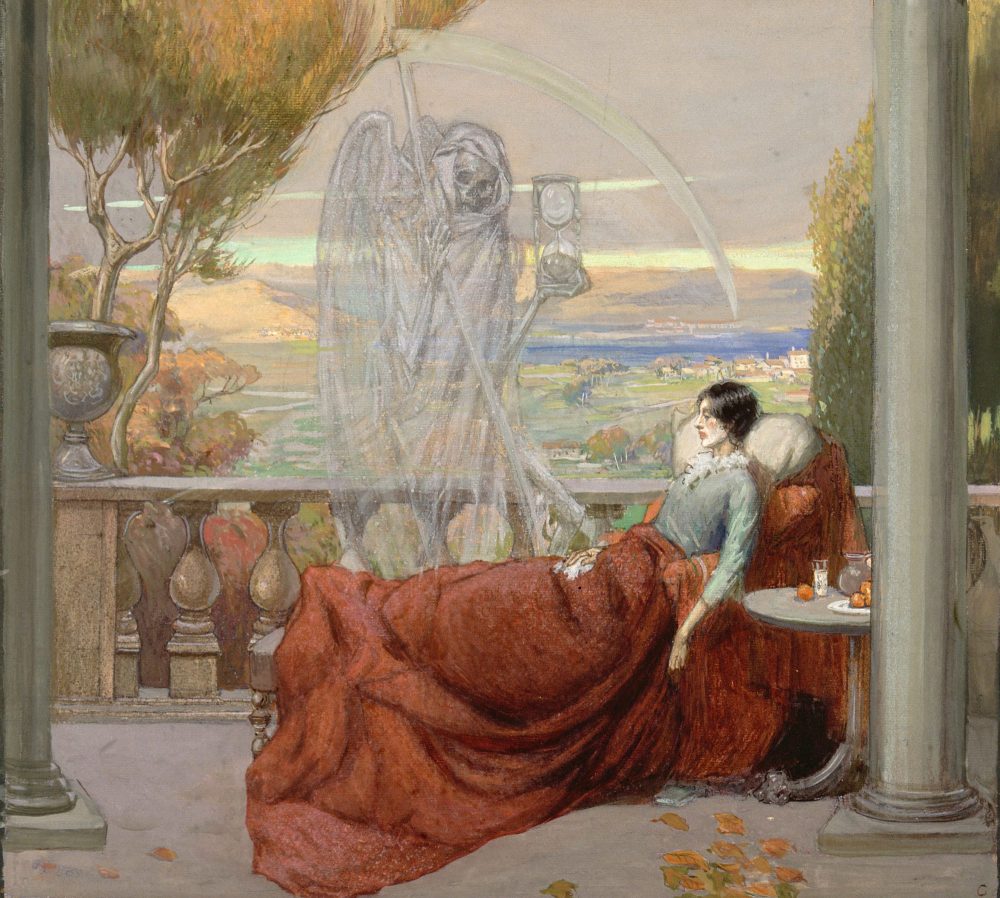
This April, the Daily Classical Music Post will look at composers who died during pandemics, as well as some who survived and a few who composed works to commemorate those who lost their lives.
“This is a mighty wonder: in the discharge from the lungs alone, which is not particularly dangerous, the patients do not despair of themselves, even although near the last.”—Aretaeus of Cappadocia
The German composer Carl Maria von Weber (1786–1826) died at the age of 39 from tuberculosis.
Weber: Oberon – English Text Version with Narration / Act 3 – Terzettino: And I must I then
Von Weber’s contribution to Romantic-era opera was substantial. His development of national German themes, leitmotif, and non-Western culture influenced many later composers, including Heinrich Marschner, Giacomo Meyerbeer, Richard Wagner, and Mikhail Glinka.
In 1824, the Royal Opera invited von Weber to London, commissioning his three-act opera Oberon to a libretto by James Robinson Planché that was based on Christoph Martin Weiland’s poem “Oberon.” Virginia Gorlinski notes, “In form, Oberon was little to his taste, having too many spoken scenes and elaborate stage devices for a composer who had always worked for the unification of the theatrical arts in opera. But into it he poured some of his most exquisite music.”
Von Weber completed Oberon in 1826 and travelled to London, already suffering from TB, to conduct the premiere and following performances in April and May of that year. His health continued to deteriorate and he died in a friend’s home in June. Although he was buried in London, many years later his remains were moved to his family burial plot in Germany. Wagner gave the eulogy at the reburial.
The plot of Oberon is fairly simple: Oberon, king of the fairies, vows that he will not be reconciled to his queen, Tatiana, until a human couple can be found that will be faithful to each other to death. He thinks that he has found that couple: Sir Huon and Reiza. Of course, various obstacles are put in their way, by Puck and mischievous fairies, including a shipwreck and a kidnapping. It all works out in the end, of course.
In Act 3, scene 1, Huon has been spirited away to Tunis by Puck, where Sherasmin and Fatima have just declared their love for each other. Huon, Sherasmin, and Fatima sing the trio “And Must I Then?”
HUON
And must I then dissemble?
SHERASMIN
No other hope I know.
HUON
But let the tyrant tremble,
Unscathed he shall not go!
FATIMA
Viewless spirit, of pow'r and light,
Thou who mak'st virtue and love thy care,
Restore to the best and the bravest knight,
The fondest and fairest of all the fair.
HUON
Spirit ador'd, strike on our part,
Bless the good sword and the faithful heart!
SHERASMIN AND FATIMA
Spirit ador'd, strike on our part,
Bless the good sword and the faithful heart!
My classical music post for today is “And Must I Then” from Carl Maria von Weber’s Oberon.


Leave a Reply