

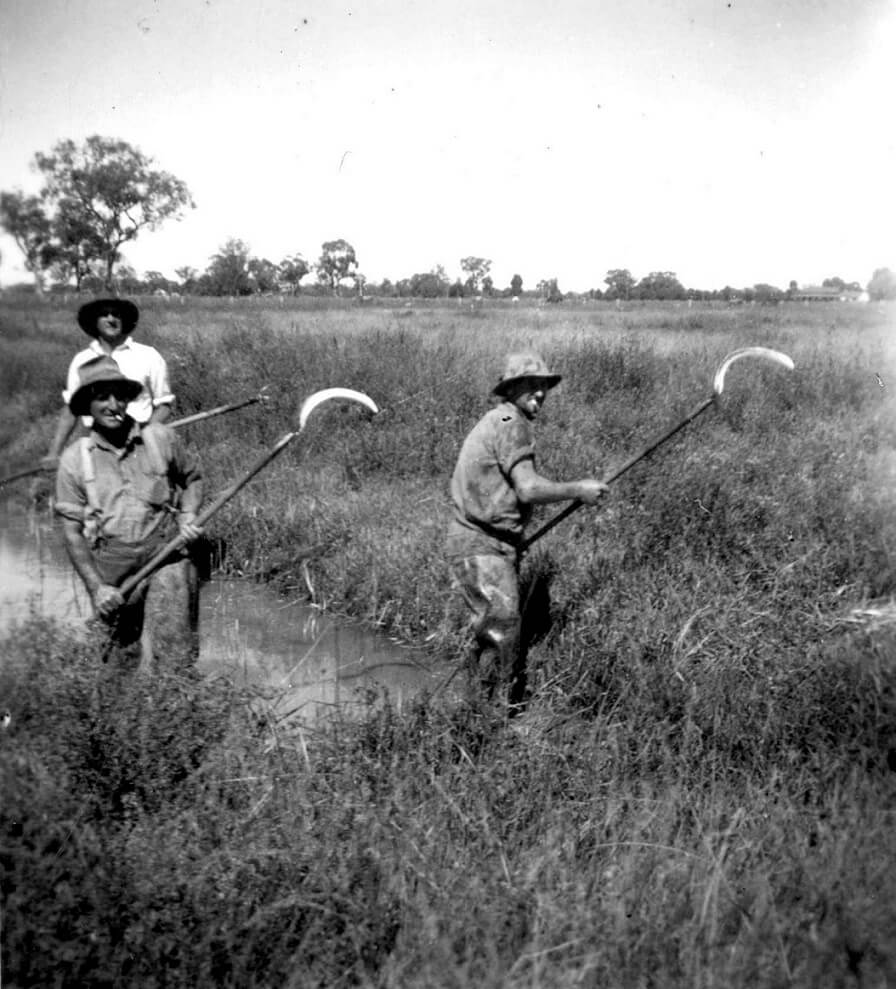
For millennia, the rhythms of planting and harvest have shaped human life, marking seasons of labour, renewal, abundance, and gratitude. This October, the Daily Classical Music Post has journeyed across eras and continents, celebrating harvest in the Northern Hemisphere and planting in the Southern through music inspired by the Earth and its changing seasons.
Percy Grainger (1882–1961) was born in Melbourne, Australia, and became one of the most distinctive musical personalities of the early 20th century. A brilliant concert pianist, composer, and enthusiastic collector of traditional folk music, he spent much of his adult life in Europe and the United States. Many of his best-known works are arrangements of folk songs, including Country Gardens, Molly on the Shore, and Lincolnshire Posy. Harvest Hymn (completed 1932), however, is not a folk-song arrangement but an original composition.
Grainger began work on the piece in 1905, although, characteristically, he continued working on it over many years and produced several different versions. Its musical language nevertheless has something of the directness and openness that attracted him to folk music. Harvest Hymn was an elaboration on a melody composed earlier that Grainger called “Hymny Tune.” He originally conceived the piece for what he called “elastic-scoring,” meaning that it could be played by various flexible instrumental combinations, small ensembles, full orchestra, or solo piano. The 1932 piano version could also be played simultaneously with any of the other versions.
Grainger produced most of the arrangements himself, but perhaps the most popular one, for wind band, is by the arranger Joseph Kreines. Kreines took Grainger’s original full orchestral score and combined it with the solo piano version to create the much-loved arrangement. (You can hear Kreines’ version here: Harvest Hymn (Arr. J. Kreines).)
The opening is broad and deliberate, with strong, widely spaced chords that give the music an almost ceremonial quality. Rather than introducing a long, flowing melody immediately, Grainger lets short melodic ideas emerge from these harmonic blocks. As the piece progresses, the texture becomes more full and the phrases more expansive. Repeated rhythmic figures provide forward movement while the harmony shifts through unexpected turns, creating moments of tension before opening again into rich, resonant sonorities. The effect is less like watching people physically gather a crop than standing back afterwards and contemplating what has been accomplished.
My classical music post for today is Percy Grainger: Harvest Hymn.


Leave a Reply