

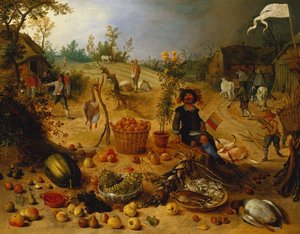
For millennia, the rhythms of planting and harvest have shaped human life, marking seasons of labour, renewal, abundance, and gratitude. This October, the Daily Classical Music Post will journey across eras and continents, celebrating harvest in the Northern Hemisphere and planting in the Southern through music inspired by the Earth and its changing seasons.
Haydn: Die Jahreszeiten – Hob. XXI:3 – Der Herbst: No. 19a Einleitung/Rez.: “Was durch seine Blüte”
Haydn: Die Jahreszeiten – Hob. XXI:3 – Der Herbst: No. 19b Rez.: “Den reichen Vorrat”
Haydn: Die Jahreszeiten – Hob. XXI:3 – Der Herbst: No. 20 Terzett mit Chor: “So lohnet die Natur”
Joseph Haydn (1732–1809) composed Die Jahreszeiten (The Seasons) between 1799 and 1801, immediately after the enormous success of The Creation. The German libretto by Baron Gottfried van Swieten was loosely based on James Thomson’s English poem The Seasons. The resulting oratorio follows three country people—Hanne, Lukas, and Simon—through spring, summer, autumn, and winter, observing both the changing natural world and the activities of rural life.
The orchestral introduction to Der Herbst (Autumn) depicts what Haydn himself described as “the farmer’s joyful feelings over the rich harvest.” Hanne then looks back over the entire growing season: what spring first promised and summer brought to maturity, autumn now reveals in abundance to the farmer. Almost every stage of the harvest is mentioned—growth, ripening, and, finally, harvest.
Simon continues the story by describing the practical business of bringing that harvest home. Heavily laden wagons creak toward the barns, carrying the riches of the fields, while the stores become so plentiful that there is scarcely room to contain everything that has been harvested. Haydn’s music moves from contemplation of nature to the satisfaction of seeing months of hard work finally rewarded.
This leads directly into the trio and chorus, “So lohnet die Natur den Fleiß” (Thus nature rewards industry). Hanne, Lukas, and Simon join the chorus in praising the rewards produced by both nature and human labour. The music becomes increasingly animated and celebratory, and it ends with a rousing chorus.
Haydn’s harvest is therefore about more than the moment when a crop is cut. Spring provides the promise, summer brings the growth, people supply the labour, and autumn delivers the reward. Haydn reminds us in Die Jahreszeiten that every overflowing harvest wagon wouldn’t happen without all of this.
My classical music post for today is Joseph Haydn: Die Jahreszeiten, Hob. XXI: 3, Der Herbst: “Was durch des Herbstes milden Blick”; “So lohnet die Natur den Fleiß”; “Seht, wie zum Haselbusche dort.”


Leave a Reply