

“If you were a country, what would your national anthem be?”—David Levithan
One of my favourite things about the 2026 FIFA Men’s World Cup was hearing some national anthems that I had never heard before as well as some that I rarely hear. And I wondered: How did each country choose its national anthem? Was it newly composed or taken from something already in existence? This August, the Daily Classical Music Post will explore the anthems of 31 of the 32 teams that made it to the knockout stage.
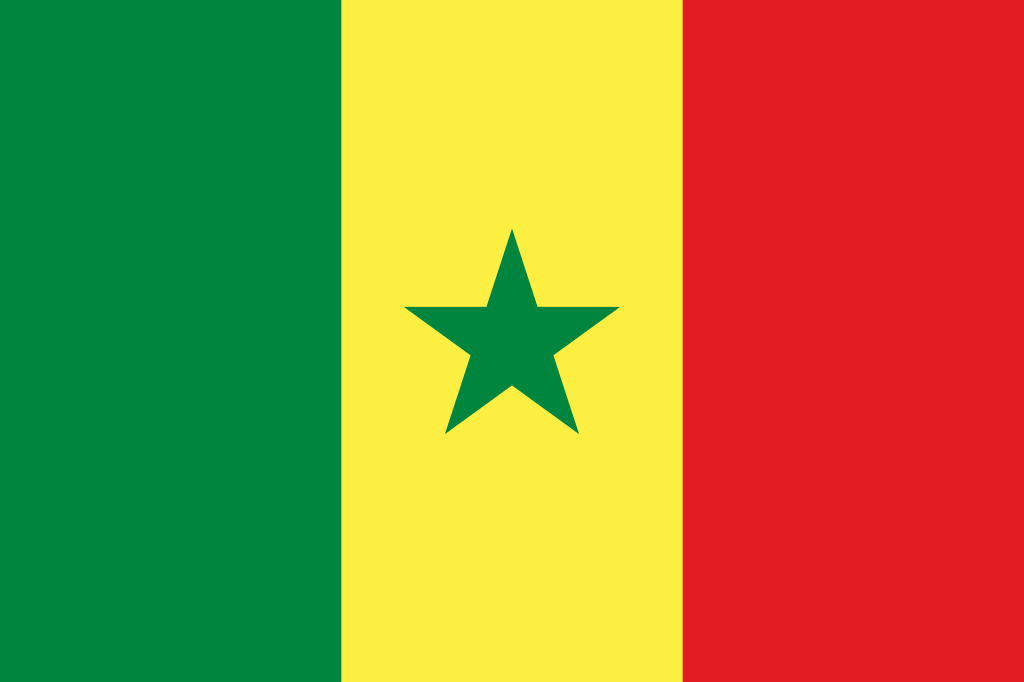
National anthem of Senegal (FR/EN) – Hymne national du Sénégal
We continue our exploration of the anthems of the countries represented in the 2026 FIFA Men’s World Cup knockout stage (minus the United States of America), in alphabetical order, with Senegal.
“Le Lion rouge” (The Red Lion), also known as “Pincez tous vos koras, frappez les balafons,” was written by the French composer Herbert Pepper (1912–2000) to lyrics by Léopold Sédar Senghor, the first president of Senegal. This anthem was formally adopted in 1960, the same year that it was written. Senegal is one of only three countries to have words to its national anthem written by a sitting head of state (the United Arab Emirates and the Dominican Republic are the other two).
Senghor wanted something really special for the melody, and so he contacted Pepper and asked him to collaborate. This pairing was a fascinating meeting of minds: Pepper had spent decades living in Africa, meticulously recording and studying traditional indigenous melodies. The result was a song utilizing Western classical marching structures but built around the rhythms of traditional West African folk songs.
But, oh dear, we have another one of those pesky plagiarism things. In 1963, a Swiss Red Cross official said that the melody of the new Senegalese anthem sounded almost identical to a European hymn that had been associated with the Red Cross movement. Musicologists stepped in to defend Pepper and Senegal, managing to prove that any similarities were entirely a coincidence of standard major-scale harmonies. The Senegalese government and people breathed a sigh of relief.
I would love to hear a version of this on the traditional Senegalese instruments mentioned in the title, the kora (a harp-like instrument) and the balafon (xylophone). In fact, the opening of the anthem, “Everyone strum your koras, strike the balafons,” is an instruction to include the indigenous instruments in every performance.
The anthem was written in French, which is the official administrative language of Senegal, but there is a movement to create official translations in Wolof (“Yëngalleen kooraa yi, te jiin ndënd yi”) as well as in other languages such as Pulaar or Serer to make it more accessible to everyone in Senegal.
My (somewhat) classical music post for today is Herbert Pepper: “Le Lion rouge.”


Leave a Reply