

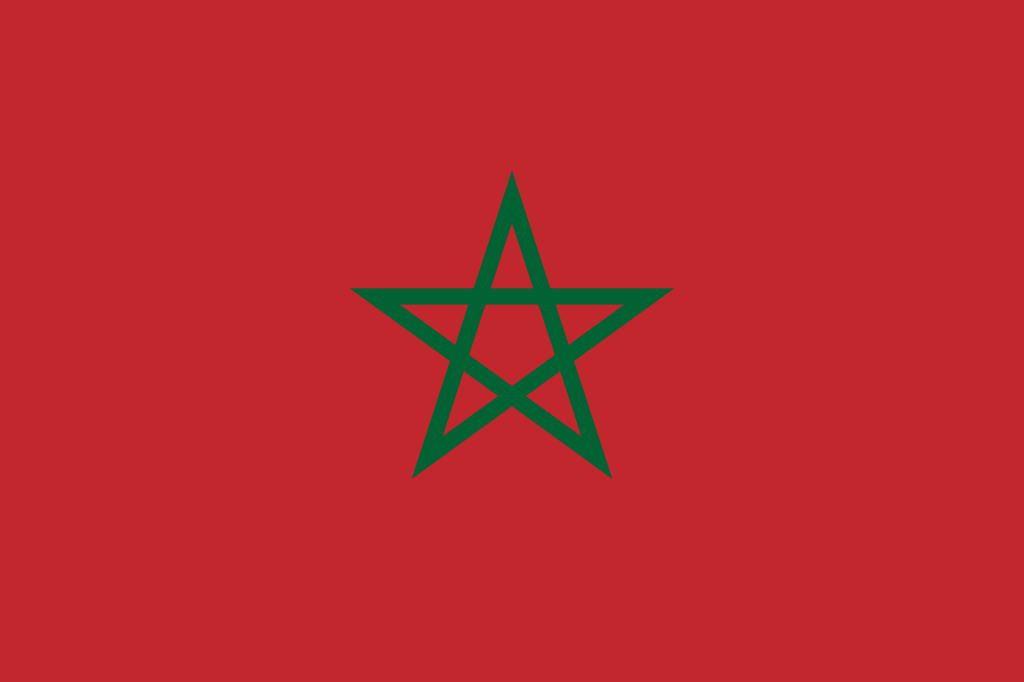
“If you were a country, what would your national anthem be?”—David Levithan
One of my favourite things about the 2026 FIFA Men’s World Cup was hearing some national anthems that I had never heard before as well as some that I rarely hear. And I wondered: How did each country choose its national anthem? Was it newly composed or taken from something already in existence? This August, the Daily Classical Music Post will explore the anthems of 31 of the 32 teams that made it to the knockout stage.
Moroccan National Anthem: Arabic + Transcription + English Translation
We continue our exploration of the anthems of the countries represented in the 2026 FIFA Men’s World Cup knockout stage (minus the United States of America), in alphabetical order, with Morocco.
The “Cherifian Anthem” has been the national anthem of Morocco since the mid-20th century. It was composed by a French military officer and musician, Léo Morgan (1919–1984), in 1956, without lyrics. Some sources say that there were words, but they weren’t anywhere to be seen (or heard) when the tune was adopted upon independence from France. What is known is that the wordless version was made official by King Mohammed V’s government and became the state fanfare of the newly independent country.
And the “Cherifian Anthem” might very well have remained wordless to this day but for a sporting event. When in late 1969 Morocco made history as the very first African nation to qualify for a FIFA World Cup—the 1970 FIFA World Cup held in Mexico—Moroccan officials realized that although teams from other countries would be proudly belting out their own anthems, the Moroccan players would be standing on the pitch in silence. They did not like the look of that look.
King Hassan II immediately held a competition to write lyrics that would fit Morgan’s Western European–style brass melody. Within days, the famous Moroccan writer and poet Ali Squalli Houssaini won the competition and set to work on the rush commission. Squalli Houssaini did a brilliant job matching the syllables of Arabic poetry to the strict rhythmic tempo of a European military march. And he also accomplished this in a few weeks, a remarkable achievement. The words were rushed to the team, and they all managed to memorize it before their matches against West Germany, Peru, and Bulgaria (learning the words became part of their daily training). The pride they showed while singing the new words affected the people back home so much that the government transitioned it from “the World Cup song” to the official national anthem, text included.
This is another of my favourite national anthems. It is so evocative and atmospheric. It is a pretty good length as well, and seems very singable.
My (somewhat) classical music post for today is Léo Morgan: “Cherifian Anthem.”


Leave a Reply