

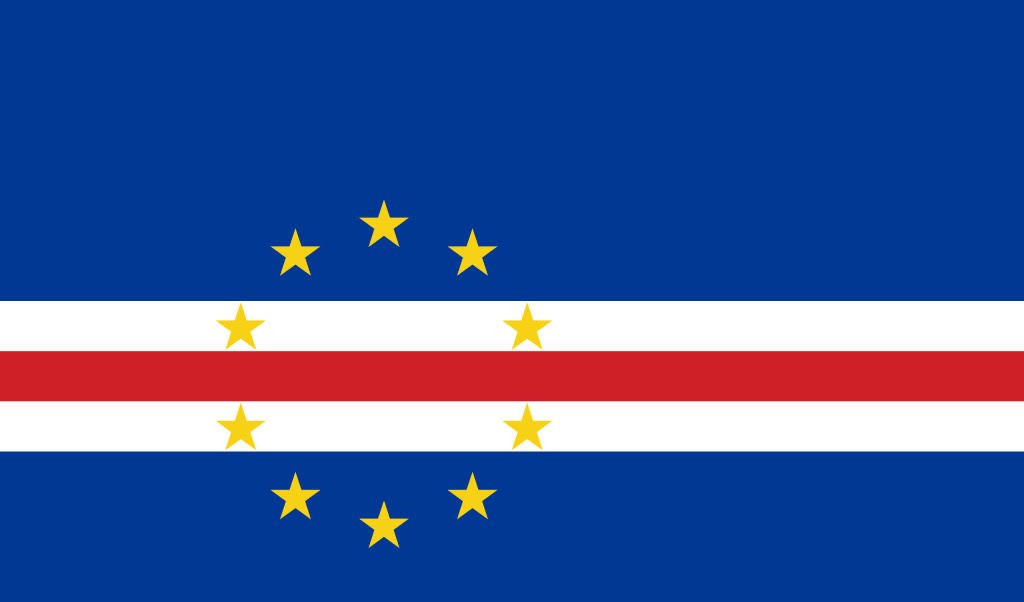
“If you were a country, what would your national anthem be?”—David Levithan
One of my favourite things about the 2026 FIFA Men’s World Cup was hearing some national anthems that I had never heard before as well as some that I rarely hear. And I wondered: How did each country choose its national anthem? Was it newly composed or taken from something already in existence? This August, the Daily Classical Music Post will explore the anthems of 31 of the 32 teams that made it to the knockout stage.
National Anthem of Cape Verde – “Cântico da Liberdade”
We continue our exploration of the anthems of the countries represented in the 2026 FIFA Men’s World Cup knockout stage (minus the United States of America), in alphabetical order, with Cabo Verde.
Countries that were under colonial rule were forced to have the anthem of their oppressors, and, as we have seen, as soon as they were able, they got rid of that musical symbol and adopted a new anthem, one that was all their own. The situation for Cabo Verde was a little different, however.
When Guinea-Bissau and Cabo Verde achieved independence from Portugal in 1975, both adopted “Esta É a Nossa Pátria Amada,” which had been composed as a patriotic song, as their national anthems. There was a plan to merge both countries into a single nation, but the unification plan collapsed in the 1980s when Guinea-Bissau went in a different political direction. The Cabo Verdean government set up a competition, inviting citizens to submit entries for a new anthem.
The winning poem was written by the then President of the National Assembly, Amílcar Spencer Lopes, and the music was composed by the Cabo Verdean composer and musician Adalberto Higino Tavares Silva, known as Betú (born 1961). The National Assembly approved the new anthem, “Cântico da Liberdade,” in May 1996, and it was officially adopted in July 1996.
Betú wanted the music of this optimistic anthem to be very different from the often aggressive military style of traditional liberation anthems. He slowed down the tempo, evoking a sense of the calm stability of a mature democracy. He was a celebrated composer of morna—the soulful and poetic traditional music of Cabo Verde—and used rising and falling notes to mimic the movement of ocean waves and sea winds.
When the anthem was first introduced in 1996, some citizens who were loyal to the legacy of the independence struggle felt a strong attachment to the shared anthem. But over the years, more Cabo Verdeans have embraced “Cântico da Liberdade,” and it is now popular throughout the country.
My (somewhat) classical music post for today is Adalberto Higino Tavares Silva: “Cântico da Liberdade.”


Leave a Reply