

“If you were a country, what would your national anthem be?”—David Levithan
One of my favourite things about the 2026 FIFA Men’s World Cup was hearing some national anthems that I had never heard before as well as some that I rarely hear. And I wondered: How did each country choose its national anthem? Was it newly composed or taken from something already in existence? This August, the Daily Classical Music Post will explore the anthems of 31 of the 32 teams that made it to the knockout stage.
Bosnia and Herzegovina National Anthem | 2026 Independence Day
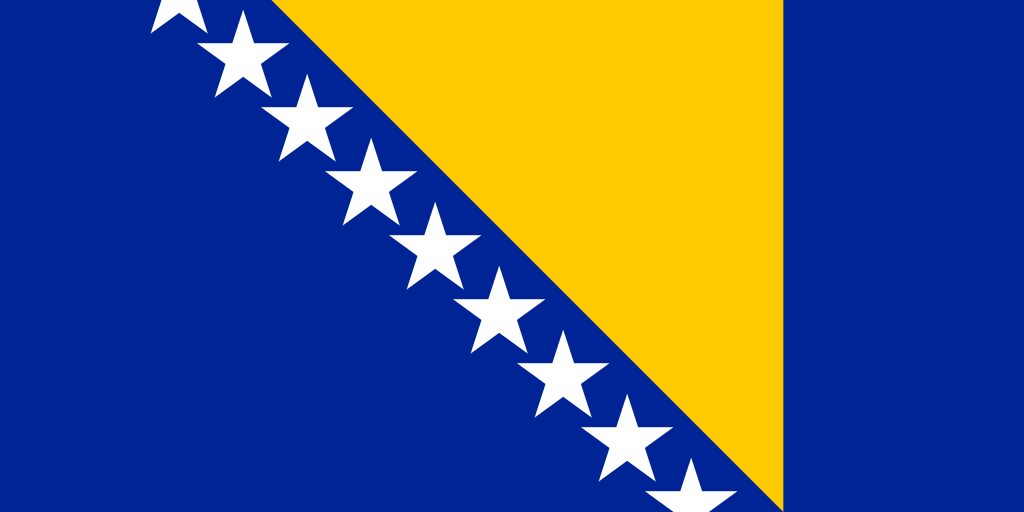
We continue our exploration of the anthems of the countries represented in the 2026 FIFA Men’s World Cup knockout stage (minus the United States of America), in alphabetical order, with Bosnia and Herzegovina.
Bosnia and Herzegovina is one of only four countries in the world to have a purely instrumental national anthem (the other three are Spain, Kosovo, and San Marino).
The Bosnian-Serb composer Dušan Šestić (born 1946) wrote the music for the anthem, usually known as “Intermeco,” in 1998, and it was adopted provisionally in 1999 and then made official in 2001. There were no words because, partly due to the Dayton Agreement at the end of the Bosnian War, no one ethnic group was to be mentioned by any other group, and it was felt that any text would not be sufficiently inclusive or respectful. Although there have been attempts to write a text, there has not been a consensus, and so the anthem remains wordless.
Alex Marshall wrote, “Dusan Sestic is arguably the world’s unluckiest composer. Back in 1998, he found himself short of money so decided to enter the contest for a new Bosnian national anthem, one meant to help heal the country’s bitter ethnic divides following its civil war. He didn’t really want to win—he was more nostalgic for Yugoslavia than patriotic for the new country—so entered a gently stirring song that he felt good enough to come second or third, pocket some prize money and move on. But he won, and his life changed dramatically overnight. Fellow Serbs, some of whom opposed the very existence of Bosnia, started labelling him a traitor. Many Bosniaks and Croats were equally annoyed that an ethnic Serb had written the tune that would symbolise their country. He struggled to get work.” He wasn’t ever paid for the anthem, either.
And that wasn’t all that went wrong for Šestić. Someone claimed that his tune plagiarized Elmer Bernstein’s “Faber College Theme” from National Lampoon’s Animal House (1978). Here is a link to that, so you can decide for yourself: Elmer Bernstein – Faber College Theme (Animal House); Šestić said he probably heard it at some time but he didn’t intentionally plagiarize it. Although he wasn’t ever sued, the cloud of this still hangs over him, and over the anthem.
My classical music post for today is Dušan Šestić: “Intermeco.”


Leave a Reply