

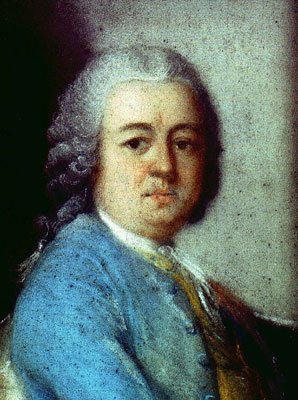
Classical music composition often runs in the family. This July, the Daily Classical Music Post will celebrate some of the well-known and not-so-well-known members of these composing families.
Johann Ludwig Bach (1677-1731) – Mache dich auf, werde Licht (c.1726)
The most prolific dynasty in classical music, you will be unsurprised to hear, is the Bach family. This German musical family can be traced back to Veit Bach, a 16th-century baker and amateur musician, and for the next eight generations, some of the most highly respected musicians—more than 50—were descended from this very unassuming man. Of course, the most famous was Johann Sebastian Bach, but over the next three days we will explore some of the less-well-known members of the family.
The Baroque composer Johann Ludwig Bach (1677–1731) was a third cousin of J.S. Bach. (Side note: as the first name of many of the members of the Bach family was Johann, at the time they usually were referred to by their middle name.) Ludwig was Kapellmeister in Meiningen at the same time as his cousin J.S. was employed in Leipzig. Ludwig was mostly known for his dozens of vocal works, including cantatas that J.S. admired so much that he copied and performed them in Leipzig. Ludwig did compose orchestral music later in his life, but most of that is lost. For many years, Ludwig’s cantata Denn du wirst meine Seele nicht in der Hölle lassen was thought to have been composed by J.S., but it’s widely accepted now that it was Ludwig’s work.
Mache dich auf, werde licht (JLB 9), a sacred cantata for the Feast of Purification, was the ninth of twelve cantatas that Ludwig composed between 1726 and 1746. This work is scored for SATB soloists, SATB choir, 2 oboes, strings, and basso continuo. As in most of Ludwig’s cantatas, this cantata pretty much follows an older form of mixed cantata: text from the Old Testament; recitative air; text from the New Testament; air; recitative chorus; chorus. Throughout, Ludwig’s mastery of counterpoint and word-painting is evident. There’s an almost operatic flair in the solo sections, and J.S. acknowledged that his cousin was one of his influences when he composed his own cantatas.
There are eight movements in this two-part cantata. The first part begins with a majestic bass aria, followed by a soprano/tenor duet, a recitative for alto, and a soprano aria. This part ends with a tenor aria. The second part opens with an alto aria, followed by a recitative for the SATB soloists, and the cantata concludes with a large-scale chorus.
My classical music post for today is Johann Ludwig Bach: Mache dich auf, werde licht.


Leave a Reply