

It’s May, and in the northern hemisphere, that means it’s spring! This May, the Daily Classical Music Post will explore music about May, spring, renewal, rebirth, and reawakening.
Joseph Haydn / Die Jahreszeiten: Der Frühling (Schuldt-Jensen)
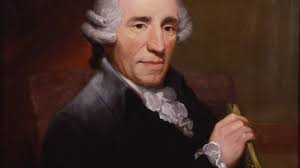
The Austrian composer Joseph Haydn (1732–1809) composed his oratorio Die Jahreszeiten (The Seasons) from 1799 to 1801. It was first performed at the Schwarzenberg palace in Vienna. Although it was successful, it did not do quite as well as The Creation, composed just two years earlier. The librettist for Die Jahreszeiten was Baron Gottfried van Swieten, who also was the librettist for The Creation.
Die Jahreszeiten is in four parts corresponding to (unsurprisingly) the seasons of the year. Van Swieten adapted a poem by James Thomson and translated it from the English original to German; this allowed for performances in either language.
Nina Anne Greeley says of “Der Früling” (Spring), “Emphasizing the cyclical nature of the seasons, Haydn opens the oratorio with the transition from winter to spring. The opening overture presents the demise of winter through its vigorous evocation in the strings of the torrents of melting snow and winter’s dying blasts. Hanne’s gentle recitative introduces the chorus of country people’s hymn-like prayer invoking spring. The orchestra alternates between gentle, almost tentatively lyric passages and more triumphant, energetic ones; the hoped-for spring appears only gradually. But spring has truly arrived by the time Simon sings his dancelike song (No. 4) depicting a farmer cheerfully planting his fields. Listen to the orchestra immediately after Simon’s first phrase and you’ll hear the famous melody from the ‘Surprise Symphony’ played by the piccolo. Perhaps the farmer is whistling that very tune as he plows his fields! This entire section celebrates the promise of youth, with lilting passages that call attention to the beauty of newly budding flowers, the playful energy of frisking lambs, and the busy activities of the bees. It closes with a stirring hymn of praise to God, punctuated by the soloists’ prayerful trio, concluding in a fugue of unmitigated joy.”
My classical music post for today is Joseph Haydn: Die Jahreszeiten: “Der Früling.”


Leave a Reply