

It’s May, and in the northern hemisphere, that means it’s spring! This May, the Daily Classical Music Post will explore music about May, spring, renewal, rebirth, and reawakening.
String Quartet No. 14 in G major K. 387: I. Allegro vivace assai
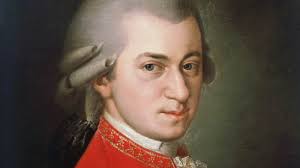
The Austrian composer Wolfgang Amadeus Mozart (1756–1791) composed his String Quartet No. 14 in G Major, K. 387, nicknamed “Spring,” in 1782. It is the first of his Haydn Quartets, which he composed in honour of the composer considered to be the father of the form, Joseph Haydn.
The “Spring” quartet is quite chromatic, which is unusual even for Mozart, and he also messed a bit with the overall form of the string quartet: usually the minuet is the third movement, but for this quartet Mozart placed it second. In many ways, it is quite an innovative work. Misha Amory says, “The second movement, a Minuet, is one that Haydn must have especially appreciated, as it incorporates a favorite Haydn trick: refusing to cooperate with the dance’s triple meter. . . . When Haydn eventually heard a performance of three of these quartets, he made his famous comment to Mozart’s father, Leopold: ‘Before God and as an honest man, I tell you that your son is the greatest composer known to me either in person or by name. He has taste and, what is more, the most profound knowledge of composition’.”
Robert Cummings wrote, “The opening movement, marked Allegro vivace assai, features fairly intricate instrumental writing: thematic lines are often started by one instrument and completed by another. It also contains a complex, substantial development section; yet the music is quite easy for the listener to grasp. The main theme is graceful and light, lengthy in its winding, sunny pathway. For all its seeming lightness, however, the music has considerable expressive depth, even if the alternate theme is carefree and largely devoid of deeper significance. The development section begins in a somewhat ponderous manner, the music at first appearing a bit hesitant before taking on an animated, more serious character. A delightful reprise closes out this joyful and masterful movement.”
My classical music post for today is Wolfgang Amadeus Mozart: String Quartet No. 14 in G Major, K. 387, “Spring,” I. Allegro vivace assai.


Leave a Reply