

It’s May, and in the northern hemisphere, that means it’s spring! This May, the Daily Classical Music Post will explore music about May, spring, renewal, rebirth, and reawakening.
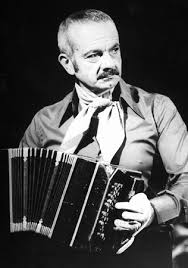
The Argentinian composer Astor Piazzolla (1921–1992) composed his Cuatro Estaciones Porteñas (Four Seasons of Buenos Aires, 1965–1970) initially as four separate tango pieces. Primavera Porteña (Spring) was composed in 1970, and, as with the other three pieces, it was written for a quintet made up of violin/viola, piano, electric guitar, double bass, and bandoneón (a concertina-type instrument). You can hear references to Vivaldi’s Four Seasons in all of the movements. Beth Fleming says, “Spring in Buenos Aires is filled with excitement and a rhythmic electricity that propels the work to its brilliant conclusion.”
I’m just going to back up for a minute here and say that although spring in Argentina is from September to November, and May is actually in the autumn, as Piazzolla called his piece “Spring,” I’m happy to include it in this month’s survey. As it is such a fun and interesting piece, I’m sure you’ll agree that it was right to do so.
A wonderful thing about Piazzolla is his ability to combine tango, jazz, and classical music seamlessly. Primavera Porteña has elements of figure, improvisational jazz, virtuosic runs (particularly in the guitar), and an energy that only a seductive and complex tango can portray. This movement has been arranged for different instruments, but it is Piazzolla’s original instrumentation that really conjures up images of spring in Buenos Aires.
My classical music post for today is Astor Piazzolla: Primavera Porteña.


Leave a Reply