

“Give me your tired, your poor, / Your huddled masses yearning to breathe free.” This poem, which once epitomized the spirit of the United States of America, would appear to no longer be true, with immigrant visa processing for more than 75 countries shut down indefinitely by the current US government. This month, the Daily Classical Music Post will explore and celebrate the traditional and contemporary classical music of 31 of these countries.
Classical music in Laos has its roots in court music from Luang Prabang and ensemble performances, often featuring the khene (bamboo mouth organ) and piphat (an ensemble of wind and string instruments). Traditional Laotian classical music is often attributed to anonymous music masters or 19th-century Thai composers. French colonists brought Western European music traditions and instruments to Laos in the late 19th century. The end of the civil war in 1975 resulted in the suppression of traditional classical Lao music, but since then there has been a revival, with composers often fusing traditional Lao music with Western European instruments and musical forms.
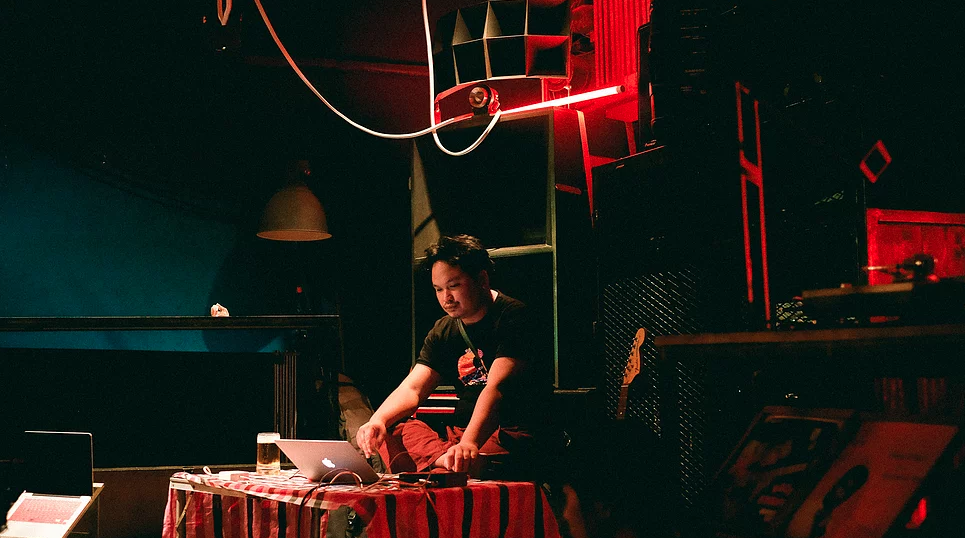
The French-Laotian multi-instrumentalist and composer David Somphrachanh Vilayleck was born to Laotian immigrants who escaped Laos near the end of the civil war. He studied jazz guitar, improvised music, and composition at French conservatories. He founded Ayankoko, which, according to his website, is “an ever-evolving project which questions the ear about sound perception, its raw nature, the definition of music and the concept of ugly-beauty. Ayankoko uses syncopation, abnormal time signatures, and polyrhythms to explore new conceptual frameworks and create an overwhelming feeling of weightlessness.” His music combines electronic techniques with the traditional music of his Laotian heritage.
His album Kia Sao ກ້ຽວສາວ was released in 2019, and it is an extraordinary mix of psychedelic jazz fusion, minimal harsh noise, bass-driven techno, and traditional Laotian folk and classical music. Sam Goldner wrote, “The promotion for this album has come with regular reminders of the bombs still littered throughout Laos and the diaspora of which Vilayleck’s music comes as a direct result. Kia Sao ກ້ຽວສາວ translates to ‘holding your daughter on your back,’ and in listening to . . . the artificial strings that loop throughout ‘Tebu Sauyun,’ one can hear the sound of history circling back unto itself, as Vilayleck brings these folk melodies into a frenzied, modernized context. Its neon-hued glow feels like both a gesture of thanks to his parents for preserving his own future and a horrifying reaction at the chaos of a world where such atrocities can be carried out on an entire people, only to be swept under the rug for decades.”
My classical music post for today is David Somphrachanh Vilayleck: “Tebu Sauyun.”


Leave a Reply