

“Give me your tired, your poor, / Your huddled masses yearning to breathe free.” This poem, which once epitomized the spirit of the United States of America, would appear to no longer be true, with immigrant visa processing for more than 75 countries shut down indefinitely by the current US government. This month, the Daily Classical Music Post will explore and celebrate the traditional and contemporary classical music of 31 of these countries.
National Arab Orchestra – Ghadan – Suad Bushnaq
Classical music in Jordan blends modern orchestral techniques with regional influences. The Amman Chamber Orchestra was founded in 2018. It performs music that blends Western and Middle Eastern classical music. Although traditional Jordanian music, which has its origins in Bedouin culture and incorporates instruments such as the rababah, oud, qanun, and mijwiz, is the dominant form of music in Jordan, classical music combining those instruments and traditional melodies has become more popular in recent years.
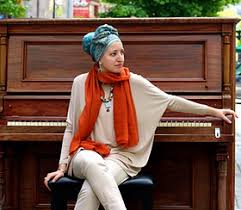
The Jordanian composer Suad Bushnaq (born 1982) was born and raised in Amman, Jordan. She began playing the piano at the age of 5 and composed her first piece of music, a birthday song for her brother, when she was just 9 years old. She studied music in Jordan, Syria, and Canada, and has taught in the United States of America.
Ghadan (Tomorrow) part of Bushnaq’s Hakawaty (The Storyteller) Suite for Orchestra (2017). She said of the piece, “Hakawaty Suite for Orchestra is a tribute to Abu Shadi-Rasheed Al Hallaq, who was known as El-Hakawati, or ‘The Storyteller of Damascus’. He was an icon of the five-hundred year old café, Al Nofara, in the Old City. . . . The suite is composed of five movements which can be played in any order. . . . Ghadan (Tomorrow) is a movement that can be played at the very beginning of the suite, or at the very end, as it anticipates a better future for a war-torn country. It is full of hope, with lush, velvety harmonies supporting melodies that build up to create a state of euphoria. . . . The introduction is a ‘pastorale’ scene reflecting the serenity of Old Damascus where mornings have a special flavour. The sun rises gradually until finally, morning breaks. There is a sudden surge of energy that introduces the first theme, and one could imagine the frenzy of shopkeepers opening their stores, while splashing the cobblestone alleys with cold water to cool them off. There is a play in the clarinet on the Muslim call to prayer, mixed with church bells: a juxtaposition that is ever so present in this city, interpreted here in a lighthearted manner. The second theme is a soaring lyrical melody that consists of a playful conversation between the strings and the woodwinds. It is heard a second time after a modulation in the key, this time accompanied by the riq (tambourine), turning it into a stately dance. The movement ends with a fugue in the woodwinds, while a harmonic pedal of heartbeat rhythms is repeated in the strings.”
My classical music post for today is Suad Bushnaq: Ghadan.


Leave a Reply